
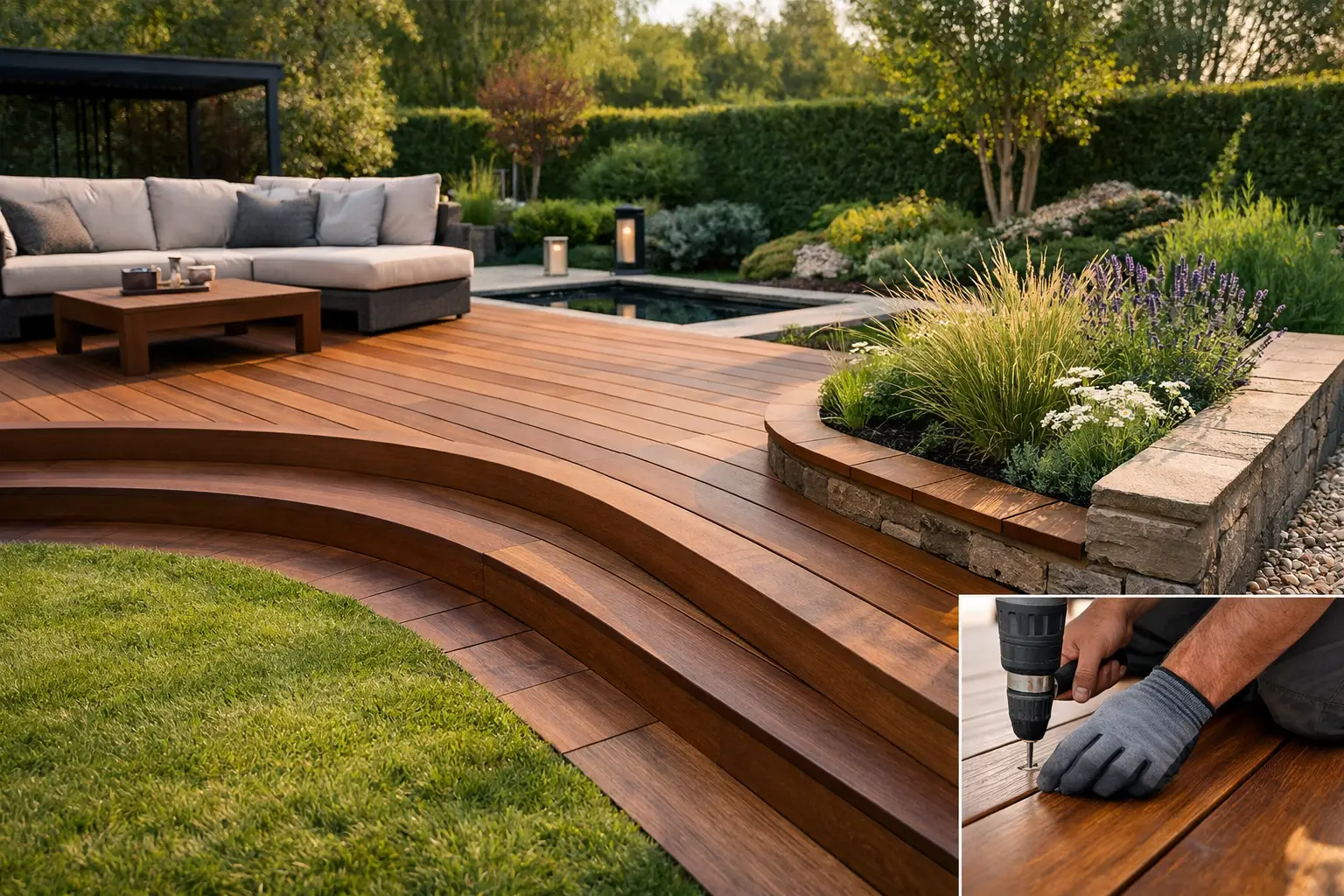
Bespoke Garden Decking Installation That Fits
A good deck changes how a garden feels the moment you step onto it. Done well, bespoke garden decking installation gives you more than a level platform for chairs and pots. It creates a natural extension of the house, shaped around how you actually use your outdoor space, and finished in a way that feels considered rather than added as an afterthought.
That difference matters in British gardens, where space is often uneven, boundaries are rarely generous, and the weather asks a lot of any external timber. A made-to-measure approach allows the deck to respond to slopes, awkward corners, existing planting, doors, thresholds and sightlines from inside the home. Instead of forcing standard decking boards into a standard layout, the design starts with the garden itself.
Why bespoke garden decking installation makes a difference
Off-the-shelf decking can look tidy on day one, but it often shows its limits once it has to work around real life. Perhaps the seating area feels too narrow, the steps are in the wrong place, or the deck cuts across the garden rather than tying it together. In smaller gardens especially, a few inches either way can change whether a space feels open and balanced or cramped and compromised.
With bespoke garden decking installation, those decisions are made deliberately. The shape can be softened around planting beds, squared off to suit modern paving, or designed to frame a lawn neatly. Levels can be adjusted to create a smoother transition from the back door. Built-in features can also be considered from the start, whether that means integrated seating, planters, storage or subtle changes in height that define different zones without making the garden feel busy.
The result is not simply custom for the sake of it. It is practical. A deck that fits properly is easier to use, easier to maintain and more pleasing to live with through every season.
Starting with the garden, not just the deck
The best decking projects begin with observation. How does the sun move across the space? Where do people naturally step out from the house? Which views should be opened up, and which areas would benefit from screening or structure? These are small questions, but they shape the final result far more than choosing a board profile from a brochure.
Ground conditions matter too. Some gardens are straightforward and level. Others have drainage issues, tired concrete, tree roots or ground that rises away from the house. A bespoke approach takes those realities seriously. Sometimes a raised deck is the right answer. Sometimes a lower profile works better and keeps the garden feeling connected. Sometimes a combination of steps and landings gives the cleanest finish.
There is always a balance to strike between appearance and use. A large entertaining space may suit one household perfectly, while another needs a quieter corner for morning coffee and room left over for children to play. Good craftsmanship is not only about neat joints and crisp cuts. It is also about listening carefully enough to build the right thing in the first place.
Choosing timber with care
Material choice has a huge influence on both character and longevity. Timber brings warmth that is hard to match, but not all timber behaves in the same way outdoors. The right selection depends on the look you want, the level of exposure in the garden and how much ongoing maintenance you are comfortable with.
Some homeowners prefer a clean, contemporary finish with sharp lines and a restrained colour palette. Others want a softer, more natural appearance that settles into the garden over time. Sustainable and reclaimed materials can also bring real charm, especially where the wider property already has character and texture worth echoing.
This is one area where experience is valuable. Beautiful timber still needs to be practical. Boards should be suitable for external use, subframes need to be sound, and every detail – from spacing to fixings – should support durability in damp British conditions. The look matters, but so does how the deck performs after repeated rain, frost and summer heat.
Design details that elevate the finish
A well-made deck often feels simple, but simplicity usually comes from careful decisions. Board direction can alter the sense of width or length in a garden. Edge detailing can make the structure feel lighter or more grounded. Steps can be broad and inviting or compact and efficient, depending on the space available.
Balustrades and screening deserve the same attention. In some gardens they are essential for safety or privacy. In others they can make the area feel boxed in if used too heavily. The right solution depends on the setting. Slim timber slats might offer enough enclosure without blocking light, while open edges may keep a smaller space feeling airy.
Lighting is another detail that is worth considering early. It does not need to be elaborate to be effective. Subtle lighting around steps or along the deck perimeter can improve safety and make the garden more welcoming in the evening. When it is planned as part of the installation, the finish tends to be much cleaner.
Practical considerations homeowners often overlook
Drainage is one of the biggest. Water needs somewhere to go, and decking should never trap moisture against the house or create areas where standing water becomes a recurring problem. Ventilation beneath the structure is just as important. Hidden elements may not be visible once the deck is complete, but they have a direct impact on lifespan.
Access also deserves some thought. If the garden has side returns, outbuildings, or storage areas that need to remain reachable, the deck layout should respect that. It is easy to focus on the main seating area and forget the routes that make a garden practical week to week.
Then there is maintenance. Bespoke does not mean high fuss, but every external timber installation benefits from sensible aftercare. A design that allows leaves to be cleared, boards to dry properly and surfaces to be treated when needed will stay looking better for longer.
The value of skilled installation
Even the best design can be let down by rushed fitting. Garden decking has to deal with movement, moisture and constant exposure, so precision matters. Levels need to be correct, cuts need to be clean, and structural elements need to be properly set out. When those basics are handled well, the finished deck feels solid underfoot and looks refined from every angle.
Equally important is the way the work is carried out. For most homeowners, this is not only about the final photograph. It is about having tradespeople on site who work carefully, keep disruption under control and treat the property with respect. A tidy, conscientious approach makes the process easier from start to finish.
That is part of the appeal of working with a specialist joinery business rather than treating decking as a purely functional build. Joinery-led installation tends to bring a sharper eye for detail, proportion and finish. At Sosa Joinery, that mindset sits at the centre of every custom timber project, whether the work is indoors or out.
How bespoke decking supports the wider home
One of the strongest reasons to choose a made-to-measure deck is how well it can tie into the character of the property. A period home may benefit from timber detailing that feels understated and timeless. A newer extension with large glazed doors may call for cleaner lines and a more architectural layout. In both cases, the goal is the same – to make the garden feel more connected to the house.
This often has as much to do with proportion as style. The depth of the deck, the width of steps and the way edges align with doors or walls all influence whether the installation feels settled in place. When these relationships are handled properly, the garden starts to read as part of the home rather than a separate zone beyond it.
That is where bespoke work earns its keep. It adapts to the house, the garden and the people living there, instead of asking them to adapt to a standard product.
Is bespoke always the right route?
For many households, yes, but there are still choices within that. Some projects call for a simple rectangular deck, built beautifully and fitted precisely. Others justify a more involved design with multiple levels or integrated joinery features. The right answer depends on the space and on what you want from it.
If your garden is very straightforward and your needs are modest, the value may lie less in a complex design and more in the quality of materials, sound construction and a finish that feels polished. If the plot is awkward, sloped or visually prominent, bespoke design becomes even more worthwhile because it solves problems that standard layouts rarely handle gracefully.
The key is not to overcomplicate the space. Good decking should make a garden feel calmer, more usable and more inviting. The best projects usually have restraint as well as flair.
A thoughtfully made deck gives you a place to sit, gather, pause and enjoy the garden properly. When it is designed around your home rather than copied from a template, it tends to feel right for years, not just for one summer.