
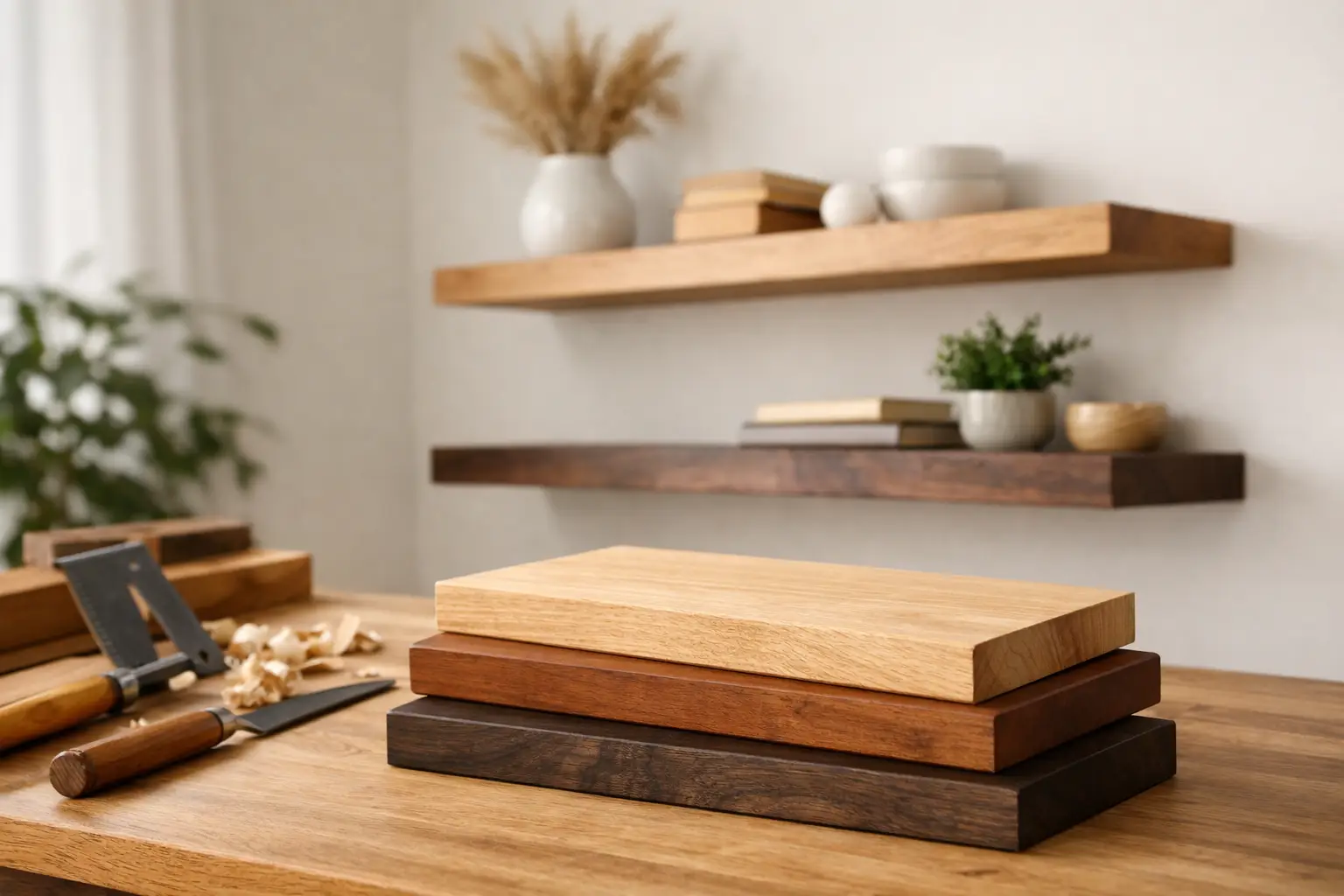
Best Wood for Floating Shelves at Home
A floating shelf can look effortless when it is finished well, but anyone who has handled a sagging shelf or a board that warps after fitting knows the timber choice matters from the start. If you are weighing up the best wood for floating shelves, the right answer depends on three things: the span, the weight it needs to carry, and the finish you want to live with every day.
In our experience, homeowners rarely want just a shelf. They want a shelf that sits neatly in an alcove, works with the rest of the room, and still looks sharp years later. That is where timber choice makes all the difference. Some woods give you crisp painted results, some are beautiful left natural, and some are better suited to heavier practical storage than decorative display.
What makes the best wood for floating shelves?
A good floating shelf needs more than an attractive face. It has to stay stable, take fixings well, and suit the room it is going into. Strength matters, of course, but so does movement. Timber is a natural material, and some species are more prone than others to twisting, bowing or shrinking if they are not selected and prepared properly.
Grain also plays a part. A straight, even grain often gives a cleaner, calmer finish, especially in modern interiors. More characterful grain can be lovely in rustic or traditional spaces, but it needs to be chosen with care so the shelf looks intentional rather than busy. Then there is hardness. A soft timber may mark more easily in a hallway or kitchen, while a denser hardwood tends to stand up better to daily use.
That is why there is no single universal winner. The best shelf timber for a painted utility room is not always the same as the best shelf timber for a statement living room wall.
Best wood for floating shelves by timber type
Oak
Oak is one of the strongest all-round choices for floating shelves, and for good reason. It is durable, dependable, and full of natural character without feeling overdone. For shelves expected to carry books, ceramics or kitchenware, oak offers reassuring solidity.
It also finishes beautifully. Oiled oak brings warmth and depth, while a clear matt finish keeps it looking natural and understated. If you want a shelf to feel like part storage, part feature, oak is often the timber people come back to.
The trade-off is weight. Oak shelves are heavier to handle and need proper support and secure wall fixings. In a floating design, that is not a problem when made and fitted correctly, but it does mean the shelf should be designed as a whole piece of joinery rather than treated as an off-the-shelf board.
Ash
Ash is an excellent option if you want strength with a slightly lighter visual feel. It is a hardwood, but it tends to have a cleaner, brighter appearance than oak. The grain is attractive without being too dominant, which makes it very versatile in contemporary homes.
For floating shelves in kitchens, home offices or alcove cabinetry, ash can strike a lovely balance between practicality and elegance. It is tough enough for everyday use, yet it does not feel visually heavy.
Ash is especially good if you like pale timber tones. It takes stain well too, although many people prefer to let its natural colour do the work.
Walnut
If the shelf is meant to make a statement, walnut is hard to beat. It has that rich, deep colouring that gives a room instant warmth and refinement. In the right setting, a walnut floating shelf can feel closer to furniture than basic wall storage.
That said, walnut is usually chosen for appearance as much as performance. It is strong and durable, but it is most at home in living rooms, studies and bedrooms where the shelf is part of the design story. Dark timber can dominate a small room if overused, so proportion matters.
For homeowners after a bespoke look with real presence, walnut is a beautiful choice, particularly when paired with simpler surrounding finishes.
Pine
Pine is often considered because it is widely available and easy to work with. For lighter-duty floating shelves, especially in painted finishes, it can do the job well. It has a softer surface than hardwoods, so it is more likely to dent or mark, but that may not matter in every room.
Where pine can be less ideal is in high-traffic areas or on longer spans carrying heavier loads. Because it is softer and generally less stable than a good hardwood, it needs careful selection and construction to avoid movement over time.
Used properly, pine can still be a smart choice. If the aim is a clean painted shelf in a bedroom, utility space or cottage-style interior, it has a lot going for it. It just would not be our first recommendation for a heavily loaded statement shelf.
Tulipwood
For painted floating shelves, tulipwood is often one of the best answers. It is smooth, relatively stable, and has a fine grain that paints very well. If you want that sharp, tailored finish where the shelf blends into panelling, alcove units or a fitted wall design, tulipwood is a strong contender.
It does not have the same decorative appeal as oak or walnut when left exposed, so this is not usually the timber for a natural clear-finish shelf. But for bespoke painted joinery, it is practical, neat and reliable.
Reclaimed timber
Reclaimed wood brings texture, history and a one-off feel that new boards cannot quite replicate. For clients who want warmth and character, especially in period homes or more relaxed interiors, reclaimed timber can be a brilliant option.
The key is preparation. Reclaimed timber needs careful checking, machining and finishing to make sure it is sound and suitable for a floating installation. Done well, it creates shelves with real personality. Done badly, it can lead to uneven movement and fitting issues.
When selected by an experienced joiner, reclaimed wood can be both sustainable and striking.
Solid wood or engineered timber?
This is where practical joinery matters as much as species. Solid timber has natural beauty and authenticity, but for some floating shelf builds, engineered construction can offer better stability. A shelf may look like a thick solid oak beam from the outside while being built in a way that reduces movement and improves long-term performance.
That is not cutting corners. It is good craftsmanship. Especially on wider shelves or longer runs, construction method can be just as important as the timber on show. The best result often comes from matching the visible material to the right internal build and bracket system.
Choosing the right wood for each room
In a kitchen, shelves need to cope with moisture changes, regular cleaning and heavier everyday use. Oak and ash are dependable choices here, especially for open shelving that holds crockery or jars. Painted shelves can work just as well, but the timber underneath needs to be stable.
In a living room, appearance often takes the lead. Oak, walnut and reclaimed timber all work well, depending on whether you want clean-lined, rich and dramatic, or full of rustic charm. Here the shelf can be more expressive and furniture-like.
In bathrooms, timber selection needs extra care because of humidity. Proper sealing is essential, and some homeowners prefer shelves used for lighter decorative storage rather than constant heavy loading. The finish matters just as much as the wood itself.
In alcoves, offices and fitted spaces, precision is everything. A bespoke shelf made to the exact width and wall condition will always look better than one forced to fit. This is often where tulipwood for paint or oak for a natural finish comes into its own.
The hidden factor: shelf thickness and support
A common mistake is focusing only on timber species and ignoring the build. Even the best wood for floating shelves can fail if the shelf is too thin for its span or the bracket support is poorly planned. Likewise, a well-made shelf in a more modest timber can perform beautifully when the proportions and fixings are right.
Long shelves carrying books need more thought than shorter shelves holding framed photos. Hollow floating shelf constructions, solid lippings, concealed steel supports and wall type all affect the result. Plasterboard, brick and block walls each ask for a slightly different approach.
This is why bespoke shelves tend to outperform standard options. They are designed around the actual room, the intended load and the finish the client wants, not just a generic dimension on a label.
So, which wood is best?
If you want one dependable answer, oak is probably the best all-round wood for floating shelves. It is strong, attractive, hard-wearing and suits a wide range of homes. But that is only the starting point.
Ash is excellent if you prefer a lighter, more contemporary feel. Walnut is ideal when you want richer colour and more visual impact. Tulipwood is one of the strongest choices for painted bespoke shelving. Pine can work for lighter-duty shelves in the right setting, and reclaimed timber is perfect when character is the priority.
The best shelf is not just made from good wood. It is made from the right wood, prepared properly, and fitted with care so it looks effortless and stays that way.
If you are planning floating shelves, it is worth thinking beyond the board itself and picturing how the shelf needs to live in your home – because the most satisfying joinery always balances beauty, strength and a perfect fit.