
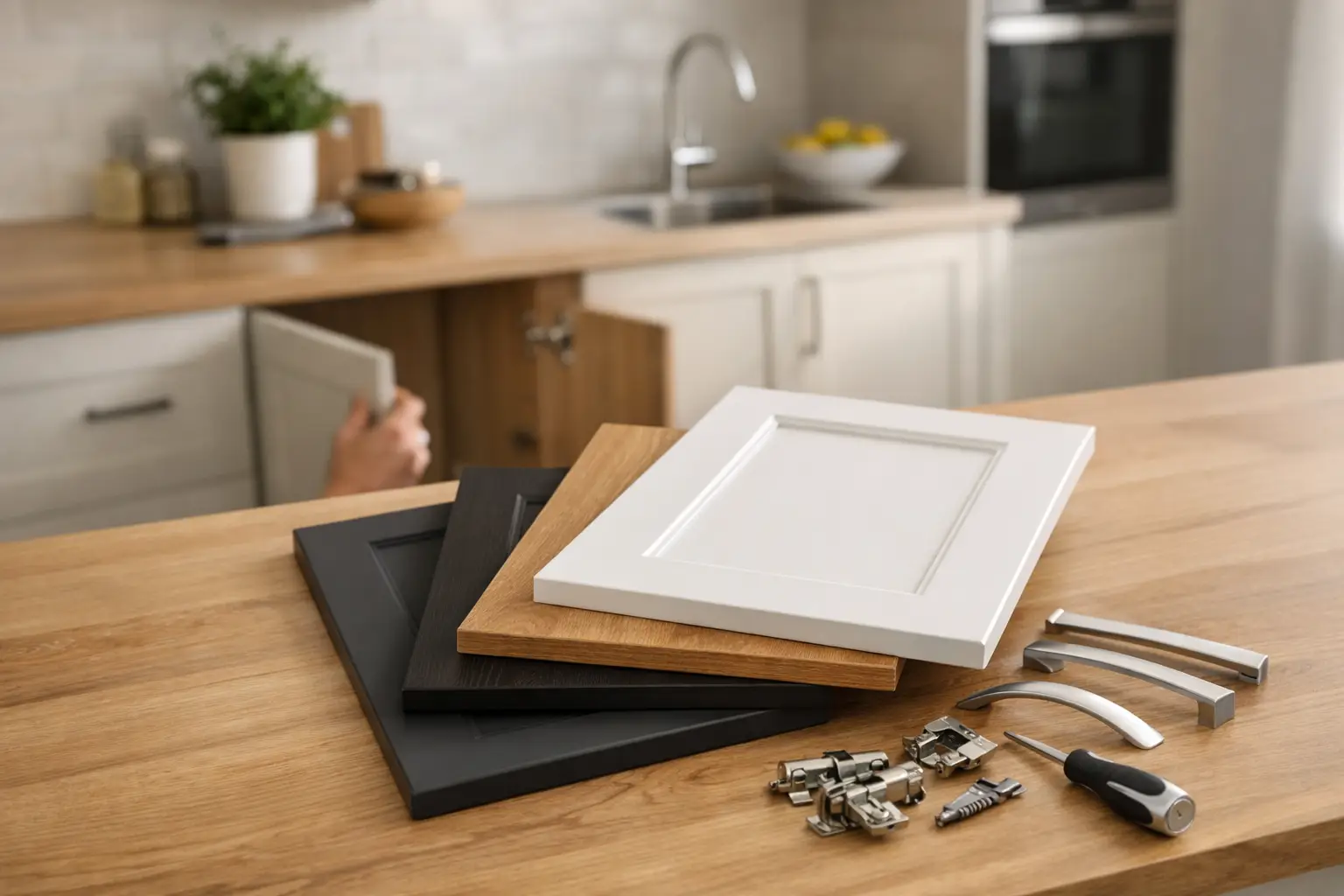
Replacement Kitchen Doors Guide for UK Homes
A tired kitchen rarely needs ripping out from floor to ceiling. In many homes, the cabinets are still sound, the layout still works, and the real problem is what you see every day – worn doors, dated finishes, chipped edges, and drawers that make the whole room feel older than it is. This replacement kitchen doors guide is for homeowners who want a smarter route to a fresher kitchen, without changing more than they need to.
Replacing doors and drawer fronts can transform the look of a kitchen surprisingly quickly, but the result depends on what sits behind them. If the cabinet carcases are well built, level, and in decent condition, new fronts can make excellent sense. If the cabinets are damaged, badly fitted, swollen from moisture, or awkwardly laid out, replacing the doors alone may only mask a bigger issue for a short while.
When a replacement kitchen doors guide points to refacing
The best candidates for replacement doors are kitchens with solid cabinet boxes and a layout that still suits the household. If your storage works well, your worktops are staying, and the room simply feels dated, new doors can give the whole space a cleaner, more considered appearance. This is often ideal for homeowners who want a visible improvement without the disruption of a full refit.
There is also a design advantage that people sometimes overlook. New doors let you shift the style of the room quite dramatically. A heavy, old-fashioned frontage can become something lighter and more contemporary. Equally, a flat modern door can be replaced with a warmer shaker style or a timber finish that brings more character into the space. Done well, it does not feel like a compromise. It feels like the kitchen has been properly refreshed.
That said, it only works if the measurements are exact and the finish is chosen with care. Slight inaccuracies in sizing, hinge positions, or alignment can stand out quickly in a kitchen, especially across a long run of cabinets.
When replacement doors are not the right answer
Sometimes the honest advice is to go further than the doors. If your cabinets are out of square, badly worn, or cheaply made to begin with, adding new fronts may not deliver the finish you want. The same applies if you dislike the current layout, need better storage, or want to change how the kitchen functions.
It also depends on the age and condition of the existing units. Water damage around the sink, loose fixings, crumbling internals, and uneven cabinet lines are all signs that the problem is structural rather than cosmetic. Beautiful new doors fitted onto poor foundations rarely stay looking beautiful for long.
This is where a measured, craftsman’s eye matters. A good joiner will not simply ask what style you like. They will look at how the kitchen has been installed, how the doors are likely to sit, and whether the end result will be worth doing.
What to check before ordering new doors
Before choosing colours and finishes, start with the basics. The cabinet boxes need to be checked for condition, level, and compatibility with replacement fronts. Not all kitchens are straightforward, particularly older ones or those that have been altered over time.
Measurements are the first major point. Door height and width must be exact, and drawer fronts need to line up neatly across the whole run. Hinge drilling also has to match the cabinet construction, otherwise fitting becomes messy very quickly. If there are corner units, integrated appliances, or unusual end panels, these details need careful attention from the outset.
Then there is the question of what else should be changed at the same time. In many kitchens, handles, hinges, plinths, end panels and cornices affect the final look just as much as the doors themselves. Keeping some elements can work, but only if they still suit the new design. A fresh door paired with tired trims or mismatched hardware can make the update feel incomplete.
Choosing the right style and material
Style should suit the home, not just the current trend. A sleek slab door can look excellent in a contemporary space, particularly where the architecture is simple and clean. Shaker doors tend to be more flexible, sitting comfortably in both modern and traditional kitchens. Timber and timber-look finishes bring warmth, which is often useful in rooms that need a softer, more lived-in feel.
Material matters just as much as appearance. Some homeowners want the painted look, others prefer woodgrain or a durable low-maintenance finish. The right choice depends on how the kitchen is used. A busy family kitchen needs materials that stand up well to daily handling, cleaning, steam and cooking grease. A quieter room may allow for a more delicate finish if that suits the desired look.
There is always a balance between character and practicality. Painted finishes can be beautiful, but they need to be well made and properly applied. Textured or natural-looking surfaces may be more forgiving in everyday use. What works best is not always the flashiest option – it is the one that still looks good after years of ordinary life.
A replacement kitchen doors guide to getting the fit right
The quality of the fit is what separates a kitchen that looks updated from one that looks patched together. Even the finest doors will disappoint if the spacing is inconsistent, the hinges are under strain, or the lines wander from one cabinet to the next.
Professional measuring and fitting bring a few quiet advantages that make a big difference. Doors open cleanly, gaps are even, and the fronts sit true against neighbouring units. Drawer lines feel deliberate rather than approximate. Panels and fillers meet neatly. These are the details people may not name straight away, but they notice them the moment they walk into the room.
It also helps when one craft-led team handles measuring, making and installation together. There is less room for assumptions, less risk of poor communication, and a much better chance of achieving a sharp, tailored finish that suits the kitchen properly. For homeowners who care about quality, that continuity matters.
How replacement doors affect the overall kitchen look
New doors never exist in isolation. They change the relationship between the cabinetry, worktops, flooring, wall colour and lighting. That is why the best results come from looking at the kitchen as a whole rather than treating the doors as a standalone purchase.
If your worktops are staying, the new front style should complement them. Warm timber or stone-effect surfaces often suit softer tones and natural textures. Darker worktops can pair well with lighter doors to keep the room balanced. If the kitchen lacks light, a brighter painted finish may help lift the entire space.
Small details can also sharpen the final result. Replacing side panels, refreshing pelmets or plinths, and choosing handles with the right scale can make the room feel properly considered. A partial update can still feel complete if those finishing touches are handled carefully.
Bespoke versus off-the-shelf replacement doors
This is often where homeowners face a trade-off. Standard-sized replacement doors can work well in simple kitchens where everything is uniform and modern. They can be a practical route if the cabinet sizes are common and the installation is straightforward.
But many kitchens are not quite that simple. Older units, altered layouts, integrated appliances and unusual dimensions often call for a made-to-measure approach. Bespoke joinery allows the proportions, material and detailing to be tailored to the room, rather than forcing the room to suit what is available.
That is especially valuable when the goal is not just to make the kitchen look newer, but to make it feel better built. A handmade solution can bring consistency across awkward areas and produce a result that looks settled, intentional and far more in keeping with the home.
What a smooth project should feel like
A good replacement door project should feel organised from the first visit. Clear measuring, honest advice, tidy workmanship and thoughtful fitting all help reduce disruption. For most homeowners, that reassurance matters as much as the doors themselves.
The process should also leave room for proper discussion. You may begin thinking you want one style, then realise another finish better suits the light in the room or the character of the house. That kind of guidance is useful, particularly when it comes from someone who understands both joinery and day-to-day living.
At Sosa Joinery, that practical and personal approach sits at the heart of good craftsmanship. The aim is never just to swap one set of doors for another, but to leave the kitchen looking refined, well balanced and built to be enjoyed.
If your kitchen works but no longer feels like your kitchen, replacement doors can be a thoughtful way forward – not a shortcut, but a carefully judged improvement that respects what is already there and elevates it with proper care.