
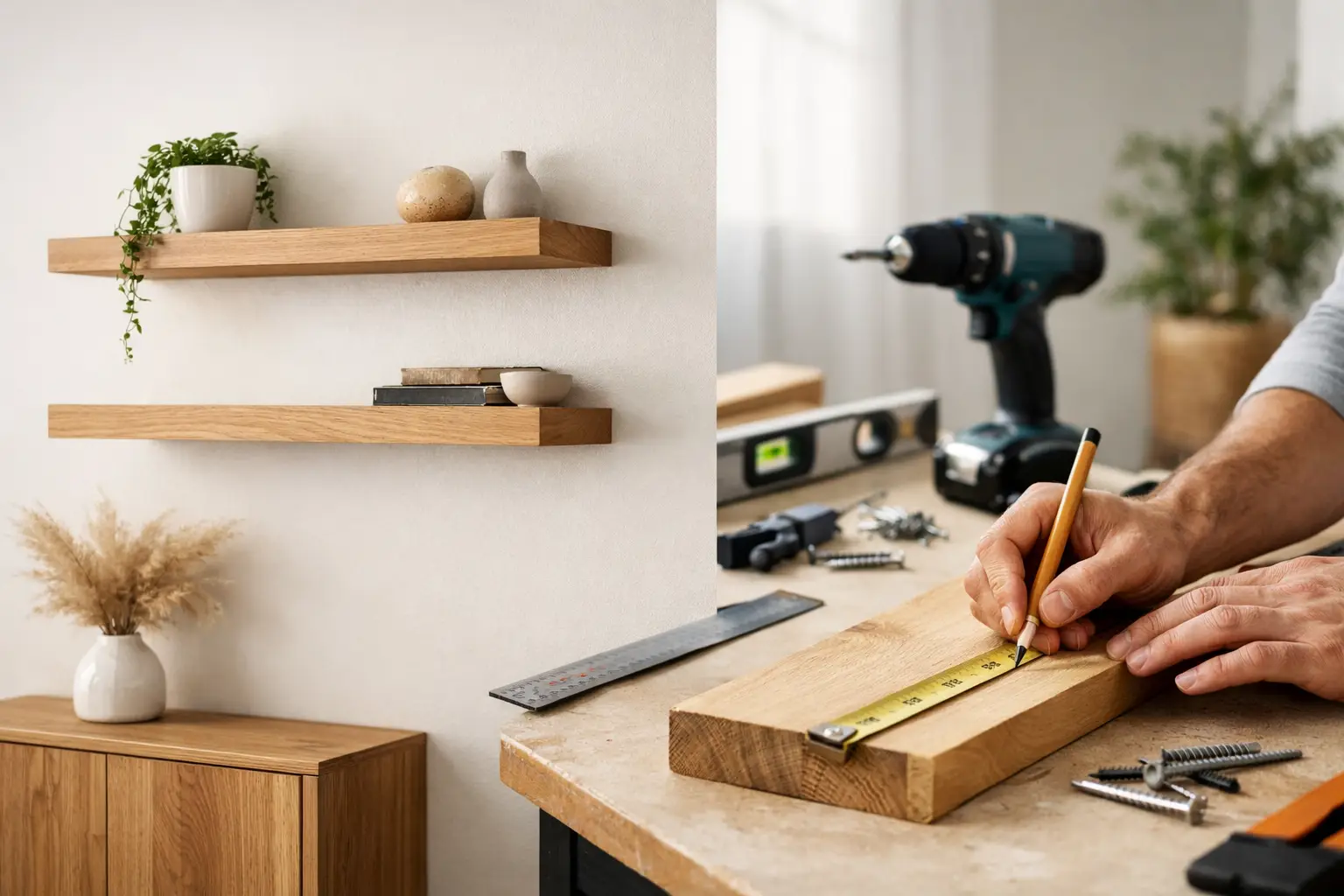
Floating Shelves Made to Measure at Home
A shelf that is 20mm too short can make a whole room look unfinished. A shelf that is too deep can crowd a walkway, catch your shoulder, or sit heavily in a space that should feel calm. That is why floating shelves made to measure are such a worthwhile upgrade – they solve practical storage problems while looking as though they have always belonged there.
For many homes, standard off-the-shelf shelving is simply a compromise. Alcoves are rarely perfectly square, chimney breasts vary, walls can be uneven, and the things you want to store are not all the same size. A made-to-measure shelf answers those little frustrations properly. It fits the room, suits the purpose, and gives the timber a chance to do what it does best – add warmth, character and clean visual structure.
Why floating shelves made to measure work so well
The appeal of floating shelves is easy to see. Without visible brackets, they look lighter and more refined than many standard shelving options. The line is cleaner, the wall feels less cluttered, and the shelf itself becomes part of the design rather than just a place to put things.
What makes made-to-measure versions different is precision. In a period property, one alcove may be wider than the other by more than you think. In a newer home, a recess might appear square until you put a straight edge against it. Bespoke shelves account for that. They are designed around the reality of the room, not an assumed set of dimensions from a retail box.
That difference matters visually, but it matters just as much in use. A well-made floating shelf should feel stable, balanced and right for what it is carrying. Books, ceramics, framed prints, kitchenware or a small record collection all place different demands on the shelf depth, thickness and fixing method. Good joinery considers those details from the start.
Where made-to-measure shelves make the biggest difference
Some of the best shelving projects are not dramatic at all. They simply make an awkward part of the home work better. Alcoves beside a fireplace are a classic example. Standard shelves often leave odd gaps at the sides or require filler pieces that never look quite intentional. A custom shelf fits wall to wall and gives the whole alcove a more settled, architectural feel.
Kitchens are another space where precision pays off. A floating shelf above a worktop can hold everyday crockery, glassware or cookbooks without making the room feel top-heavy. In a utility room, the same idea can bring order to detergents, baskets and storage jars. In a bathroom, a shelf cut exactly to the niche or recess helps the room feel tidier and better planned.
Bedrooms, hallways and home offices also benefit. A narrow hallway shelf can provide a neat landing place for keys and post without jutting out too far. A desk shelf can clear the worktop below while keeping essentials within easy reach. In a bedroom, shelves built to the exact width of an alcove can soften the room and create useful display space without the bulk of freestanding furniture.
The design choices that shape the final result
A floating shelf may look simple, but there is a lot to consider if you want it to feel truly considered. Thickness is one of the first decisions. A slimmer profile can look crisp and contemporary, while a chunkier section brings more weight and presence. Neither is automatically better – it depends on the room, the wall, and what the shelf needs to carry.
Timber choice also changes the character completely. Oak brings a calm, dependable elegance. Walnut has depth and richness. Reclaimed timber can add texture, story and a slightly softer, lived-in feel. Painted finishes suit some interiors beautifully, especially where the aim is to blend the shelf into panelling or match existing joinery. Natural finishes tend to celebrate the grain and bring warmth into a neutral scheme.
Then there is edge detail. A square edge feels modern and unfussy. A gently softened arris can feel more handmade and tactile. These are small decisions, but they affect how bespoke the result feels. The beauty of custom joinery is that those details are not afterthoughts.
Strength matters as much as style
This is where bespoke work really earns its place. Floating shelves rely on concealed support, and that support needs to be appropriate for the wall and the intended load. A decorative shelf for a few framed photographs does not need the same internal structure as a long kitchen shelf carrying stacked plates and bowls.
Solid masonry, stud walls and older plaster surfaces all require slightly different thinking. The goal is always the same – a shelf that looks effortless but feels secure. There is no point achieving a beautiful finish if the shelf dips, loosens or feels uncertain after a few months of real use.
This is also why one-size-fits-all products can disappoint. They are often made to suit average conditions, average loads and average walls. Homes are not average. A shelf fitted into an Edwardian alcove, a Victorian terrace kitchen or a modern extension each needs its own approach.
Floating shelves made to measure for awkward spaces
Awkward spaces are often the most satisfying to solve. A narrow recess, a sloping ceiling, an unused corner, or the space above a radiator can all become useful with the right shelf design. These are the places where off-the-shelf options usually give up and bespoke joinery starts to shine.
The key is not just making something fit, but making it feel intentional. A shelf under a staircase, for example, should work with the angle rather than fight it. A long shelf in an alcove should line up neatly with nearby architectural features. A kitchen shelf near a window should respect the opening light and not make the wall feel cramped.
That sense of proportion is often what separates a merely functional result from one that lifts the whole room. When a shelf is designed in response to the space around it, the room feels calmer and better resolved.
Why craftsmanship changes the finish
There is a visible difference between a shelf that has been carefully made and one that has simply been cut to size. Joinery is not just about dimensions. It is about reading the timber, choosing a finish that suits the grain, preparing edges properly, and fitting with enough care that the final line looks clean against the wall.
That matters even more with floating shelves because they sit in full view. There are no brackets to distract the eye. Every line, junction and surface is exposed. If the grain is beautiful, the shelf feels richer. If the finish is smooth and well judged, the timber catches the light in a more natural way. If the fit is exact, the whole installation looks quieter and more expensive without trying too hard.
For homeowners who value good materials and a home that feels thoughtfully put together, that level of finish is often what makes bespoke joinery worth choosing. It is not about extravagance. It is about getting the right result once and enjoying it every day.
What to think about before having shelves made
It helps to start with how you want the shelves to live in the room. Are they mainly for display, everyday storage, or both? Do you want them to stand out as a feature or sit back and support the rest of the scheme? Those answers guide decisions around depth, spacing, timber choice and finish.
It is also worth thinking about what sits below and around the shelf. A floating shelf above a desk, sideboard or kitchen worktop becomes part of a wider composition. The most successful designs take that into account, so the shelf does not feel randomly added later.
And while appearance matters, practical use should never be ignored. A shelf can be beautifully proportioned, but if it is too high to reach comfortably or too shallow for the items you actually use, it will not serve you well. Good bespoke work strikes the balance between elegance and daily life.
At Sosa Joinery, that balance is at the heart of the work. The aim is always to create timber pieces that feel beautifully made, properly fitted and easy to live with.
Floating shelves may seem like a small detail, but the right detail can change how a room feels. When they are made to measure, they stop looking like an add-on and start feeling like part of the home itself.