
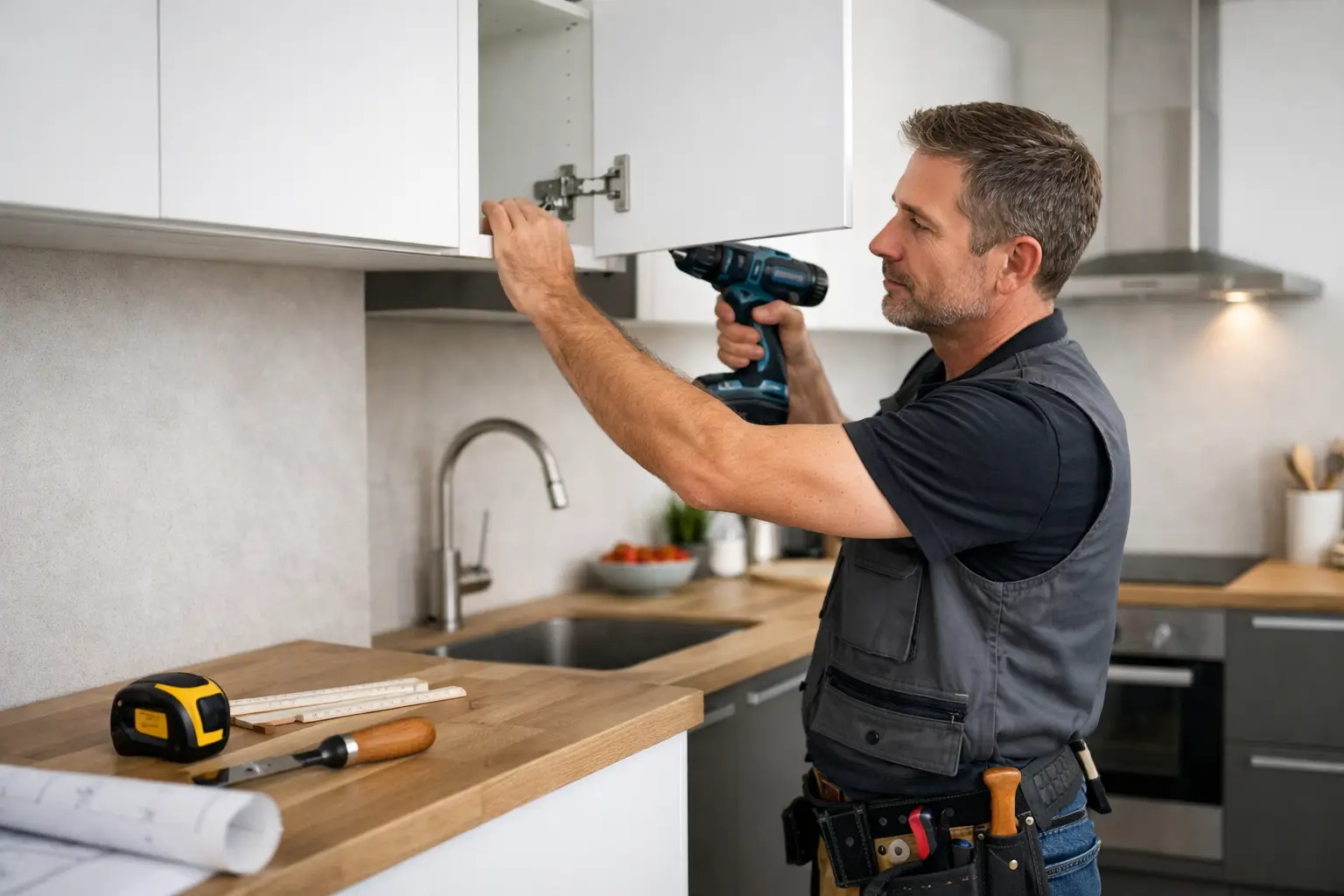
Kitchen Fitting Carpenter Near Me
A kitchen can look excellent in a brochure and still feel wrong the moment it meets a real home. Walls are rarely perfectly straight, floors can dip, and older properties often come with awkward corners, pipework and alcoves that standard units do not forgive. That is why so many homeowners start with the same search – kitchen fitting carpenter near me – because a good fit is not just about getting cabinets in place. It is about making the whole room feel considered, solid and built to last.
If you are planning a new kitchen, replacing tired units or trying to make better use of an unusual layout, the quality of the fitting matters as much as the materials themselves. Beautiful doors and worktops can be let down by poor alignment, rough scribing or careless finishing. On the other hand, thoughtful carpentry can lift even a simple design, giving you cleaner lines, smarter storage and a kitchen that feels right in everyday use.
Why a kitchen fitting carpenter near me matters
Kitchen fitting is one of those jobs that looks straightforward until the details begin. A cabinet may appear square until it meets a bowed wall. A filler panel that seems minor on paper can make the difference between a neat run and a clumsy gap. End panels, plinths, cornices, shelves and trims all need a careful hand if the finished kitchen is going to feel polished rather than pieced together.
That is where a skilled carpenter brings real value. A specialist does not just assemble units. They read the room, notice where adjustments are needed and shape each element so it belongs in the space. In practical terms, that can mean scribing cabinetry to uneven walls, adapting housing around services, refining awkward junctions and making sure doors, drawers and panels sit properly.
There is also a local element people often underestimate. When you search for a kitchen fitting carpenter near me, you are usually looking for someone who can visit, measure properly and take responsibility for the finer details on site. Kitchens are personal spaces. Being able to speak directly with the person who is fitting or crafting the work often leads to better decisions and fewer surprises.
What good kitchen fitting really looks like
A well-fitted kitchen rarely shouts for attention. You notice it in the small things – the way a door line runs cleanly across a bank of units, the way a panel meets the wall without a messy bead of filler, the way drawers open smoothly and corners feel intentional rather than forced.
Good fitting starts long before installation day. Clear measuring is essential, especially in homes where dimensions change from one point to another. Older houses, period terraces and extensions all bring their own quirks. A careful carpenter will account for these conditions early, rather than trying to patch over them later.
The next sign of quality is judgement. Not every kitchen needs the same approach. Some projects suit off-the-shelf cabinetry with bespoke finishing touches. Others benefit from custom-made elements such as shelving, breakfast bars, larders, end panels or infills that standard suppliers cannot provide neatly. The best results come from understanding where bespoke work adds genuine value.
Then there is the finish itself. Timber is a beautiful material, but it rewards precision. Clean cuts, smooth edges and well-fitted joints all matter. So does respect for the rest of the home. Careful fitting includes protecting floors, keeping the workspace tidy and working in a way that reduces disruption for the household.
How to choose the right carpenter for your kitchen
When people look for a kitchen fitting carpenter near me, they often begin with location and availability. That makes sense, but it should not be the only test. Kitchens are used hard, every single day, so the standard of workmanship deserves close attention.
Start by looking at the kind of work they typically do. There is a difference between general carpentry and detailed kitchen fitting. You want someone comfortable with cabinetry, trim work, awkward spaces and the visual standards a kitchen demands. If they also design, manufacture and fit bespoke timber pieces, that is often a strong sign they understand precision rather than just assembly.
It is also worth paying attention to how they talk about the process. Good craftspeople tend to ask practical questions. They will want to know how you use the space, what problems you are trying to solve and whether any features need to be tailored around your home. A rushed conversation can be a warning sign. A kitchen should fit your life, not just your floorplan.
Personality matters too. You are inviting someone into your home for a significant piece of work. Clear communication, reliability and a tidy working manner are not extras. They are part of the service. The best kitchen projects usually come from a relationship where the homeowner feels listened to and the craftsperson takes genuine pride in the result.
Bespoke work versus standard fitting
This is one of the biggest decisions in any kitchen project, and the answer is often somewhere in the middle. Standard kitchen units can work very well, particularly when the layout is straightforward and the product is good. But standard sizes do not always solve real homes elegantly.
Bespoke carpentry becomes especially useful where space is tight, walls are uneven or you want the kitchen to feel more tailored. That might mean creating a made-to-measure pantry unit, floating shelves that match the cabinetry, a window seat, a fitted dining nook or clever storage in a difficult corner. These additions are often what turn a serviceable kitchen into one that feels genuinely considered.
There is also a design advantage. Bespoke joinery can help the kitchen feel connected to the rest of the house rather than dropped in from elsewhere. Materials, colours and detailing can be chosen to complement your home, whether the aim is clean contemporary lines or something softer and more characterful.
At Sosa Joinery, that craft-led approach is at the heart of the work – not bespoke for the sake of it, but bespoke where it improves fit, function and finish.
Common issues a skilled fitter can solve
Many kitchen problems only show themselves once old units come out. You may find walls that are more uneven than expected, corners that are out of square or features that interrupt the neat run you had in mind. This is where experience earns its keep.
A capable carpenter can adapt cabinet lines, create custom fillers that look intentional, shape panels neatly to difficult surfaces and produce timber details that hide awkwardness without feeling like afterthoughts. They can also help integrate useful extras such as open shelving, utility storage or seating areas in a way that feels balanced with the rest of the room.
Not every challenge calls for a full redesign. Sometimes the smartest solution is a modest custom adjustment that improves the whole finish. That is one of the advantages of working with a craftsperson who sees the kitchen as a fitted space rather than a flat-pack puzzle.
A better result comes from better collaboration
The most successful kitchens are rarely the ones with the most features. They are the ones where design, materials and fitting have been thought through together. If you love warm timber tones, need storage that works harder, or want a layout that feels calmer and easier to use, those goals should shape the joinery from the outset.
A collaborative approach gives you room to make sensible choices. Perhaps you keep a standard cabinet run but add bespoke shelving around a chimney breast. Perhaps you choose simple doors and invest in smarter detailing around exposed ends and alcoves. These decisions do not need to be flashy. They just need to serve the room well.
That is why the search for a kitchen fitting carpenter near me is really about more than convenience. It is about finding someone who can see the potential in your space and has the skill to bring it out properly.
A kitchen earns its keep every day, so it should feel dependable, comfortable and well made every time you walk into it. When the carpentry is thoughtful, you notice the difference in all the quiet moments – the clean finish, the practical storage, the sense that everything sits exactly where it should.