
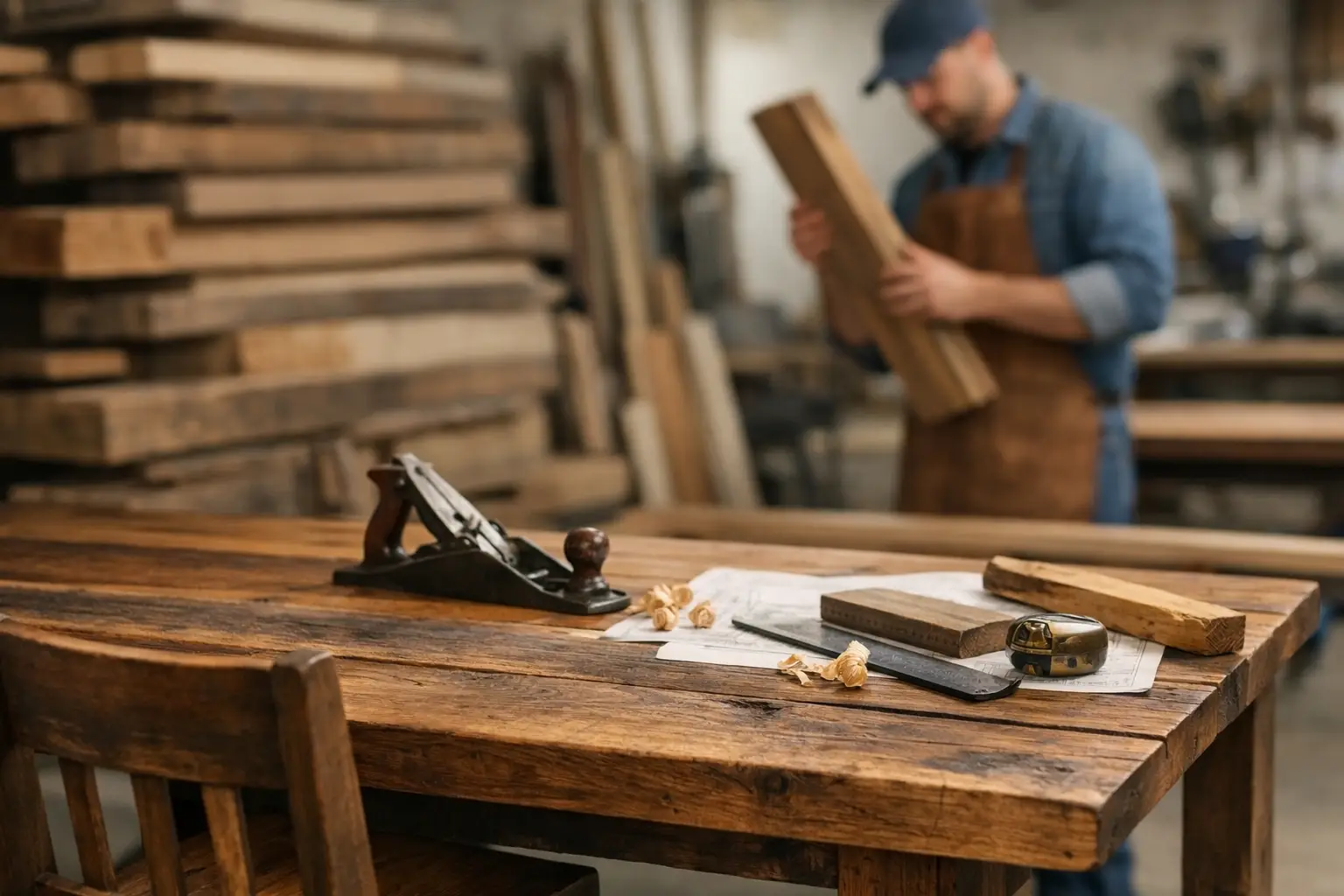
Choosing a Reclaimed Wood Furniture Maker
A good reclaimed wood furniture maker does more than build a table, shelf or cabinet. They read the room, understand how you live, and turn timber with a past into something that feels completely right for your home. That matters when you are investing in a piece you will see and use every day, not just filling a corner with something off the shelf.
Reclaimed timber has a character that new boards rarely match. Old grain patterns, subtle markings, weathering and tonal variation all bring depth. But those same qualities also demand judgement. If the wood is handled badly, rustic can quickly become rough, awkward or unreliable. The difference is craftsmanship.
What a reclaimed wood furniture maker really brings
There is a common assumption that reclaimed furniture is simply made from old wood and left looking a bit rugged. In practice, the best work is far more considered than that. A skilled maker selects timber for strength as well as appearance, understands where movement may occur, and knows how to preserve character without compromising function.
That is especially important in homes where furniture needs to do more than look attractive. A dining table has to cope with daily family use. A fitted desk must sit comfortably in the space and support the way you work. A media unit needs to hide clutter while still feeling light enough for the room. Reclaimed timber can do all of this beautifully, but only when it is shaped around the home rather than forced into it.
A bespoke approach also gives you far more control over the final result. You are not limited to standard widths, standard finishes or standard proportions. The furniture can be designed around alcoves, sloping floors, uneven walls or simply your own preferences. In many British homes, where rooms can be full of quirks, that makes a real difference.
Why reclaimed wood suits bespoke furniture so well
Reclaimed timber tends to appeal to people who want more warmth and personality in their interiors. It has an honesty about it. Marks from previous use, natural knots and tonal changes give each board a story, but that does not mean every finished piece has to look heavily distressed.
A thoughtful reclaimed wood furniture maker can take the material in different directions depending on the setting. In a period property, it may be used to echo original features and add a sense of continuity. In a newer home, it can soften a clean modern scheme and stop the room feeling flat or overly polished. The beauty of bespoke joinery is that the same material can feel rustic, refined or quietly contemporary depending on the design.
There is also the practical appeal of making better use of valuable materials. Reclaimed wood gives existing timber a new purpose, which many homeowners appreciate when they are trying to make more considered choices for their home. Sustainability matters, but so does longevity. Furniture should be made to last, not replaced when trends shift.
How to judge quality beyond the surface
Photos often highlight colour, grain and styling, but the real measure of quality sits in the details. When you speak to a maker, it helps to look past the broad idea and ask how the piece will actually be built. This is where experience shows.
Joinery matters. So does timber preparation. Reclaimed wood needs proper cleaning, selection and machining before it becomes fine furniture. A well-made piece should feel solid and balanced, with a finish that protects the timber while still letting its character show through. Doors should sit neatly, drawers should run smoothly, shelves should feel reliable under load.
There is also a question of restraint. Good craftsmanship does not try to make reclaimed wood look like something it is not. Equally, it should not leave rough edges and inconsistencies in places where precision is needed. A handmade piece can retain texture and history while still looking elegant and intentional.
For homeowners, that balance is often what separates a statement piece from something that feels too heavy or unresolved. You want character, but you also want furniture that belongs in the room.
The value of measuring, making and fitting together
One of the strongest signs of a dependable maker is an end-to-end service. When the same business handles measuring, manufacture and installation, there is far less room for compromise. Dimensions are taken with the finished result in mind, design choices are grounded in the actual space, and fitting is completed by people who understand exactly how the piece was built.
That is particularly valuable for fitted furniture, alcove storage, window seats, desks and shelving made from reclaimed timber. Older walls and floors are rarely perfectly straight, and standard furniture rarely forgives that. Bespoke work does. A piece that is carefully measured and professionally fitted will always sit better, look cleaner and make stronger use of the space.
For clients, it also makes the process simpler. You are not trying to coordinate separate trades or explain the brief repeatedly. You are working with one team that can guide the job from first idea to final installation.
Questions worth asking a reclaimed wood furniture maker
The right conversation is often more useful than a long checklist. Ask where the timber comes from and how it is prepared. Ask how the finish will suit your household, especially if the piece will get heavy use. Ask how the design can be adapted to your room rather than copied from a previous project.
It is also sensible to discuss trade-offs. Reclaimed timber is naturally varied, so if you want a very uniform look, that should be clear from the beginning. Likewise, if you love visible saw marks, rich colour variation or more texture, say so. Bespoke furniture works best when the maker understands not just the dimensions, but the mood you want the piece to create.
If storage is part of the job, think about what needs to be hidden and what deserves to be displayed. If it is a table or desk, consider how it will be used day to day. If it is shelving, think about weight, access and how the room flows around it. A good maker will help draw out these practical points and shape the design around them.
Where reclaimed furniture works best in the home
Some of the most successful reclaimed pieces are the ones that solve a problem as well as adding warmth. Floating shelves can bring life to an empty wall while offering useful storage. Under-stairs cabinetry in reclaimed timber can turn wasted space into something purposeful and attractive. A fitted media unit can calm a busy room by organising cables, devices and everyday clutter.
Dining tables, coffee tables and desks are also natural candidates because they benefit from the depth and texture of older timber. In kitchens, reclaimed wood can be used to introduce contrast through shelving, breakfast bars or feature details that soften painted cabinetry. Even a simple bench or console can change the feel of a hallway or living space when it is made to the right scale.
What matters most is proportion. Reclaimed wood has presence, so the design should respect the room. In smaller spaces, cleaner lines and lighter visual weight often work better. In larger rooms, bolder sections and richer tones can hold their own. This is another reason bespoke furniture tends to feel more successful than mass-produced alternatives. It responds to the room rather than asking the room to adjust.
Craftsmanship, character and a better fit
Choosing bespoke furniture is rarely only about furniture. It is about how you want your home to feel. A reclaimed piece can add warmth, improve storage, solve an awkward layout and bring a level of individuality that standard ranges cannot offer. But those results depend on the maker behind the work.
At Sosa Joinery, that is where the focus sits – careful design, quality timber, tidy fitting and furniture made to feel at home from the start. The aim is never just to produce something eye-catching. It is to create a piece that works hard, looks beautiful and earns its place over time.
If you are considering reclaimed timber for your home, trust your eye, but also trust the details. The right piece should feel thoughtfully made, properly fitted and easy to live with. When craftsmanship and character come together, reclaimed wood stops being a trend and starts becoming part of the house.