
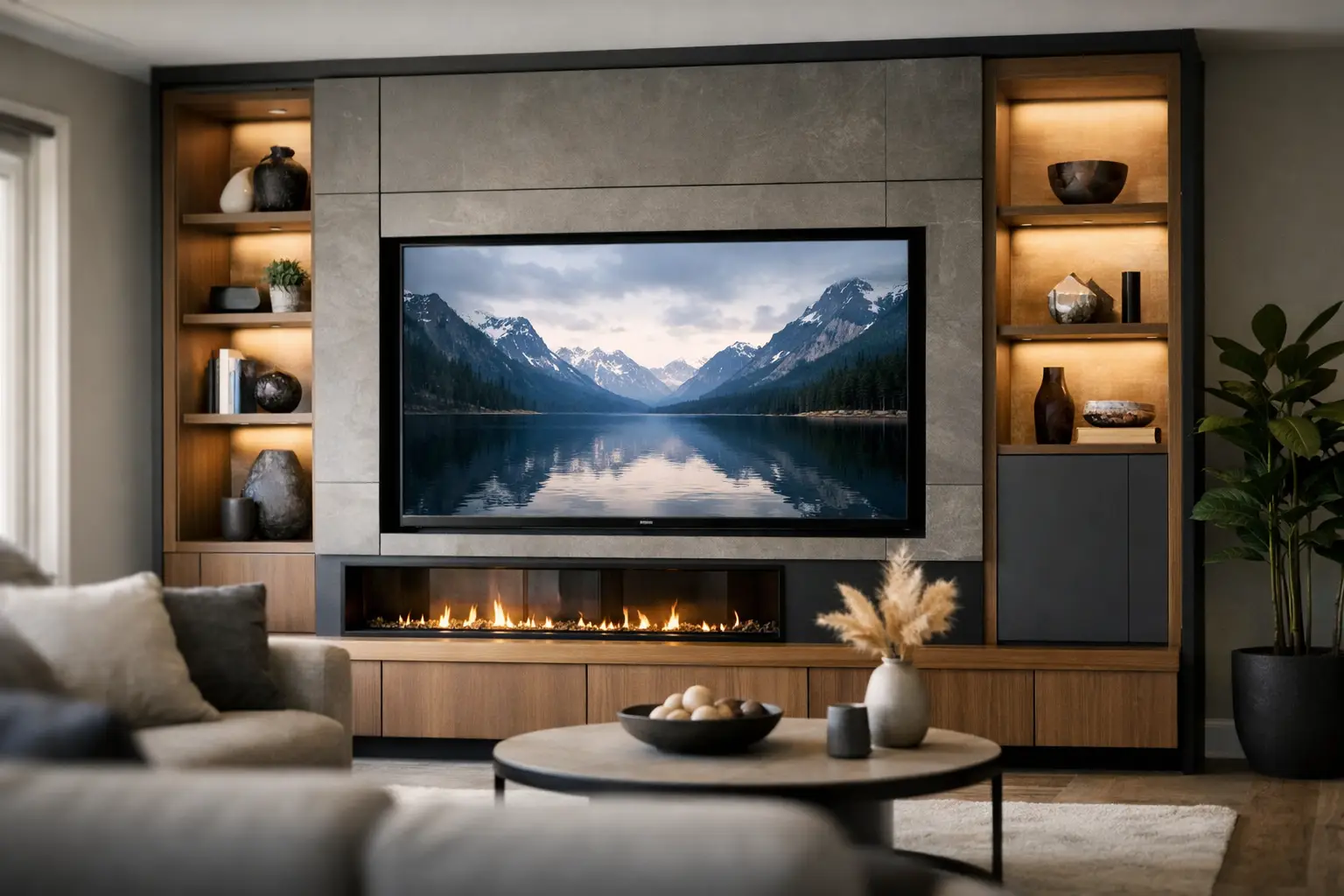
Bespoke TV Media Wall Unit Ideas
A television wall can either dominate a room or quietly bring everything together. The difference usually comes down to joinery. A bespoke TV media wall unit is not just somewhere to place a screen – it is a way to give the room structure, hide the clutter, and make the whole space feel considered rather than improvised.
For many homeowners, the frustration starts with furniture that almost fits. Off-the-shelf units leave awkward gaps, visible cables, wasted corners, or shelves that are never quite the right height. In older properties, alcoves may be uneven. In newer homes, the challenge is often making a plain wall feel warmer and more useful. This is where a made-to-measure piece earns its place.
Why a bespoke TV media wall unit works so well
A fitted media wall does more than frame a television. It helps the room feel calmer. Games consoles, routers, sound systems, remote controls, books, and decorative pieces all need a home, but they rarely look their best when left on open surfaces. Bespoke joinery allows each element to be planned from the start, so the final result looks balanced and purposeful.
There is also the matter of proportion. A large television on a bare wall can look harsh, while a small unit under an oversized screen often feels temporary. When a media wall is designed as one composition, the television sits comfortably within the wider joinery. Shelving, cupboards, panelling, and display areas can soften the overall look and make the wall feel like part of the architecture.
That said, bigger is not always better. Some rooms suit a full wall installation, while others benefit from a lighter design with lower cabinetry and a few carefully placed shelves. Good bespoke work is not about adding more for the sake of it. It is about creating the right answer for the space.
Planning a bespoke TV media wall unit for your room
The best projects begin with how you actually live. If your sitting room is a busy family space, storage will matter just as much as appearance. If it is a more formal room, the emphasis may be on clean lines and a quieter finish. The television itself is only one part of the brief.
Room size matters, but so does room use. A media wall in a compact terrace lounge needs to work harder than one in a large open-plan area. In smaller rooms, bulky side sections can make the space feel boxed in. In larger rooms, too little joinery can leave the wall looking sparse. Scale needs a careful eye.
Viewing height is another detail that affects comfort more than people expect. A screen mounted too high often looks impressive at first, especially above a fireplace, but it can become tiring to watch. It depends on seating position, screen size, and how often the room is used for long viewing sessions. A joiner who plans the wall around real use, not just first impressions, will always produce a better result.
Storage that feels tidy, not heavy
Closed cupboards are often the hardest-working part of a media wall. They hide the items you need close by but do not want on display, from cables and controllers to board games and charging leads. Open shelving has its place too, especially for books, ceramics, framed prints, or a few carefully chosen decorative pieces.
The balance between the two matters. Too much open shelving can quickly look busy. Too many solid fronts can make the wall feel dense. The right layout depends on the room and on how disciplined you want to be about styling it.
Cable management from the start
Nothing spoils a smart installation faster than visible wires. Proper cable planning should never be an afterthought. Power points, ventilation for equipment, access panels, and space for future upgrades all need to be considered before the piece is made and fitted.
This is one of the quiet strengths of bespoke work. Instead of forcing technology into a cabinet designed for general use, the cabinetry is shaped around the equipment you actually own. That means less compromise and a cleaner finish.
Materials and finishes make the difference
A bespoke media wall should feel at home in the room, not dropped into it. Material choice has a lot to do with that. Timber brings warmth and character in a way flat-pack furniture rarely can. Painted finishes can keep things crisp and contemporary, while natural or stained wood tones add texture and depth.
There is no single correct look. Some households prefer a refined painted unit that blends into the wall colour and lets the room feel airy. Others want the grain and presence of real timber to become part of the design story. Reclaimed and sustainable materials can work beautifully here as well, especially if you want something with individuality and a little more soul.
Durability also matters. A media wall sits in one of the most used parts of the home. Cupboard doors will be opened daily, shelves will carry weight, and the finish needs to stand up to ordinary life. Good craftsmanship is visible in the details, but it is also felt in how the piece wears over time.
Design choices that shape the overall look
A bespoke TV media wall unit can be bold or restrained. Some designs use full-height joinery to create a strong focal point. Others keep the lower cabinetry substantial and let the upper sections stay lighter. Both can work beautifully, depending on the character of the room.
Symmetry is popular for a reason. It gives a sense of order and often suits period properties, chimney breast layouts, or alcove spaces. Asymmetrical designs can feel more relaxed and contemporary, particularly in modern renovations or open-plan homes where the media wall needs to relate to adjoining kitchen or dining areas.
Lighting can add another layer, but it needs restraint. Soft integrated lighting on shelves can highlight texture and create atmosphere in the evening. Too much lighting, or the wrong tone, can make the wall feel fussy. The best media walls never look like they are trying too hard.
Should you include a fireplace?
Sometimes yes, sometimes no. A fireplace can create a strong central composition, but it should not force the television into an uncomfortable height. It also changes the mood of the design, making it more feature-led. If your priority is practical family viewing, a simpler arrangement may serve you better.
It depends on the room, the proportions, and what you want the wall to do. The right answer is not always the most dramatic one.
Why bespoke joinery outperforms standard furniture
Standard media units are built to suit average dimensions. Homes are not average. Walls lean, alcoves vary, skirting boards interrupt clean lines, and existing sockets never seem to be exactly where you need them. A fitted piece responds to those realities instead of ignoring them.
That means a better fit visually and physically. It also means making use of every inch. Dead space above units, narrow side gaps, and shallow storage that cannot hold modern equipment are common problems with freestanding furniture. Bespoke joinery solves those issues in a way that looks effortless once installed.
There is also a quality difference in how the finished piece feels. Handmade joinery has weight, precision, and presence. Doors close properly. Shelves align cleanly. Materials look and feel considered. For homeowners who care about long-term value, that matters.
What to expect from the design and fitting process
A well-made media wall starts with conversation. Measurements are important, of course, but so are habits, preferences, and the details of how the room is used day to day. The most successful projects come from collaboration, where practical needs and design ambitions are shaped together.
From there, careful measuring and planning set the job up properly. This is when awkward corners, socket positions, skirting details, and equipment sizes are all resolved before manufacture begins. That preparation helps installation run more smoothly and keeps the finish tidy.
For homeowners, the experience should feel reassuring. Clear planning, thoughtful workmanship, and a clean, respectful approach on site matter just as much as the final appearance. At Sosa Joinery, that balance between beautiful craftsmanship and dependable service is central to the work.
A bespoke TV media wall unit should look settled
The best fitted furniture never appears forced. It looks as if it belongs in the house and always has. That is the real appeal of a bespoke TV media wall unit. It gives you practical storage, improves the look of the room, and creates a focal point that feels measured rather than overwhelming.
If you are considering one for your home, focus on fit, proportion, and how you want the room to feel when everything is in place. Good joinery does not just fill a wall. It gives the space a sense of order, warmth, and ease that you notice every day.