
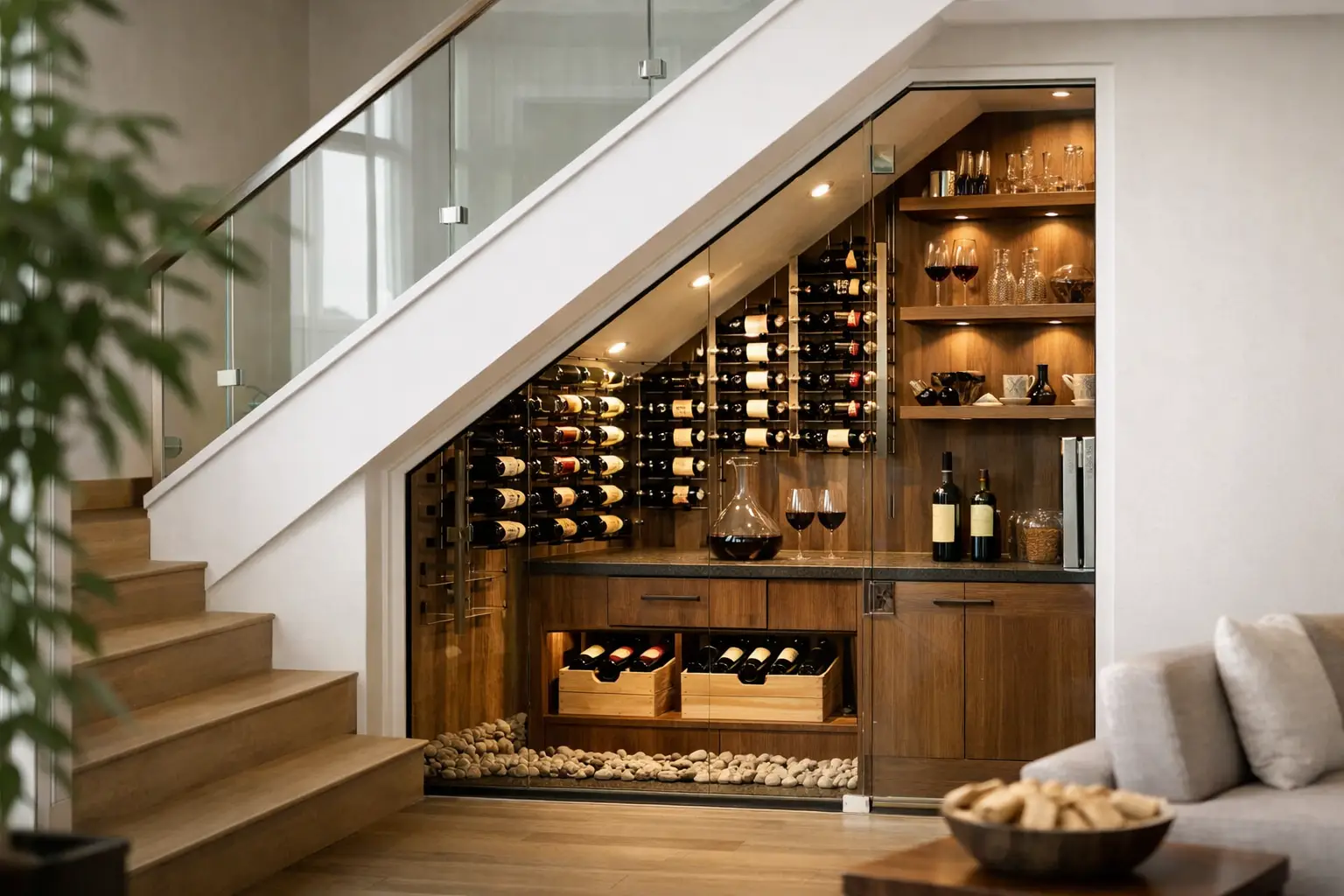
Custom Understairs Wine Storage Ideas
That awkward triangle under the stairs is often wasted on mismatched boxes, shoes, or the sort of clutter that quietly builds up over time. Custom understairs wine storage gives that space a far better purpose – one that feels practical every day and looks genuinely considered. When it is designed properly, it does more than hold bottles. It becomes part of the room, part of the home, and part of how you live.
For many households, the appeal is simple. You want storage that fits perfectly, keeps everything organised, and adds character rather than bulk. Understairs spaces are rarely standard, which is exactly why off-the-shelf units tend to disappoint. Bespoke joinery allows the shape, depth, timber, finish, and internal layout to be made around your home instead of forcing your home to work around a product.
Why custom understairs wine storage works so well
Understairs spaces can be surprisingly generous, but they are also full of awkward angles, changing heights, and hidden limitations. That makes them difficult to use well unless the storage is made specifically for them. Wine storage suits this part of the home because bottles can be arranged horizontally, vertically, or in small grouped sections, allowing the design to make good use of narrow runs and sloped ceilings.
There is also a visual benefit. A well-made wine display gives purpose to an area that is often overlooked. Instead of becoming a dark gap in the room, it can turn into a warm, crafted feature with real presence. In period homes, it can sit comfortably alongside original details. In newer interiors, it can bring texture and depth that flat-pack furniture simply cannot.
That said, the right design depends on how you actually use your collection. Someone who keeps a few favourite bottles for weekends needs something quite different from a homeowner who entertains regularly and wants space for glassware, serving accessories, and a larger stock. Good bespoke work starts there – not with a standard rack, but with your habits, your space, and the look you want to achieve.
Planning custom understairs wine storage around your home
The best results come from treating the area as part of the wider room rather than as a separate cupboard. If the joinery feels disconnected from the rest of the house, it can look added on. If it picks up the same timber tones, painted finish, or detailing used elsewhere, it feels natural and settled.
Practical planning matters just as much as appearance. Wine should be stored away from strong heat and constant vibration, so the exact position of radiators, underfloor heating zones, and nearby appliances needs thought. Hallways and open-plan living areas can work beautifully, but the design should account for temperature changes and daily traffic. In some homes, that means prioritising display and short-term storage. In others, it allows for a more substantial built-in collection.
Access is another detail that makes a real difference. Deep storage may maximise bottle count, but it is less useful if reaching the back row is awkward. A mix of open cubbies, angled shelving, drawers, and enclosed sections often gives a better balance. You may want easy access to everyday bottles while keeping special selections more protected and less visible.
Choosing the right layout
There is no single best layout for custom understairs wine storage because the staircase shape usually decides the starting point. A shallow understairs void might suit a clean grid of bottle cubbies with a small cabinet at one end. A deeper space may allow for pull-out storage, a tasting shelf, or integrated drawers below.
Some homeowners prefer a display-led design with labels visible and lighting used carefully to frame the collection. Others want a quieter look, where wine storage is integrated into painted cabinetry and sits neatly alongside general household storage. Both approaches can work well. It depends on whether you want the joinery to make a statement or blend in more discreetly.
Materials and finishes matter more than people think
Wine storage is often judged by shape alone, but the material choice has a huge effect on the finished result. Solid timber, veneered boards, painted hardwood details, and reclaimed materials all create a different feel. The right choice comes down to the style of the home and how the piece will be used.
Natural timber brings warmth and character, especially where the grain is allowed to show. It works particularly well in homes that already feature wood flooring, traditional stair parts, or other handmade joinery. Painted finishes can feel lighter and more architectural, which suits hallways where space is tighter or where a softer, cleaner look is wanted.
There is also the question of durability. Understairs areas are often part of busy family routes through the home, so the finish needs to stand up well to regular use. That is one of the strengths of well-made bespoke joinery. It is not only built to fit but built to last, with proper attention given to edges, fixings, alignment, and how the doors or drawers will perform over time.
Open display or closed cabinetry?
Open storage has obvious appeal. It turns the collection into part of the room and gives immediate access to bottles. It can also make a striking focal point, especially when combined with shelving for glasses or a small serving ledge. The trade-off is that bottles, dust, and visual clutter are all more visible too.
Closed cabinetry gives a calmer appearance and often suits homes where the understairs area sits near the main entrance or in a family circulation space. It can hide the collection neatly while still keeping it organised. A combination approach is often the most useful – open sections for selected bottles and closed sections for the rest.
Details that elevate the finished piece
What separates a decent fitted unit from exceptional custom understairs wine storage is usually the finer detailing. Proportions matter. So does the way shelving lines up with the stair angle, how gaps are handled, and whether the piece feels integrated rather than boxed in.
Lighting is a good example. Soft, warm lighting can bring depth and atmosphere, but it should be used with restraint. The aim is to highlight the craftsmanship and make the storage easier to use, not turn it into a showroom. Handles, hinges, and internal fittings also deserve care. Small choices have a big effect on how refined the joinery feels once installed.
You might also consider adding practical extras if they suit your routine. A drawer for corkscrews and accessories, a shelf for decanters, or a small section for glassware can make the whole area more useful. These additions work best when they are planned from the start rather than squeezed in later.
Why bespoke joinery is worth it in an awkward space
Understairs spaces are rarely forgiving. Walls can be uneven, floors can slope slightly, and the geometry often changes from one side to the other. That is where bespoke joinery proves its value. A made-to-measure solution takes all of those quirks into account, so the final result looks intentional and finished.
It also gives you freedom. You are not choosing the nearest size and hoping it works. You are deciding how many bottles the unit should hold, what else it needs to store, how prominent it should feel in the room, and which materials best suit the home. That level of control is what creates a piece with both function and character.
At Sosa Joinery, that is the part we value most – making something that solves a practical problem while still feeling beautifully made. The best fitted pieces do not shout for attention, but they do change the way a home works and feels.
A feature that should feel easy to live with
The most successful custom understairs wine storage does not rely on novelty. It earns its place by being useful, handsome, and properly fitted to the house around it. That may mean a bold display in an open-plan room, or it may mean a quieter built-in cabinet that keeps everything tidy behind elegant doors.
Either way, the goal is the same. Make the most of an awkward space, respect the character of the home, and create storage that feels like it has always belonged there. When that balance is right, the area under the stairs stops being an afterthought and starts becoming one of the most satisfying details in the house.
If you are considering it for your own home, start with how you want the space to work day to day. The right design usually follows from there.