
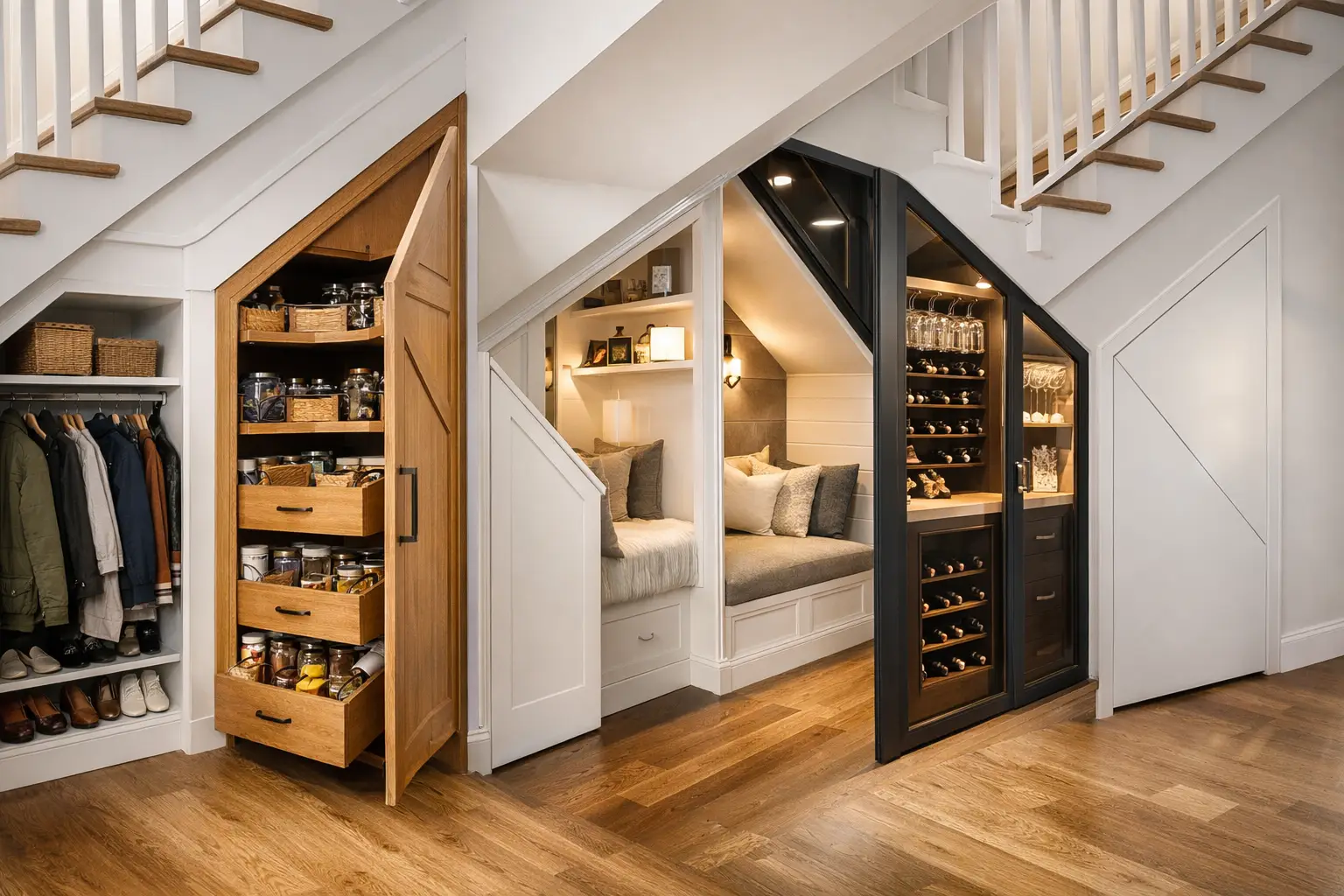
12 Under Stairs Cupboard Examples
That awkward triangle beneath the staircase is often where clutter quietly gathers – shoes, coats, bags, cleaning bits, things you mean to sort later. The best under stairs cupboard examples show something different: a space that works hard, looks considered and feels as though it was always meant to be part of the home.
A well-made cupboard under the stairs is not only about hiding things away. It is about shaping storage around real routines, the proportions of your hallway and the character of your house. In some homes, that means a clean run of painted shaker doors. In others, it means warm timber drawers, open shelving or a combination that balances practicality with a more furniture-like finish.
Under stairs cupboard examples for real homes
The right design depends on what the space needs to do. Some households need a hardworking family drop zone by the front door. Others want to reclaim a dark corner for pantry storage, a utility area or even a tucked-away desk. The most successful joinery starts there – not with a trend, but with how you live.
1. A classic hallway storage cupboard
This is often the most straightforward and most useful option. Full-height cupboard doors follow the line of the staircase and create hidden storage for coats, shoes, umbrellas, bags and the usual hallway overflow. It suits homes where visual calm matters and where open storage would quickly look untidy.
The detail makes the difference. Panelled doors can echo period features, while flatter fronts feel more contemporary. Inside, shelves alone rarely solve everything. A better result usually comes from combining hanging space, adjustable shelving and a base area for footwear, so the cupboard works properly from top to bottom.
2. Pull-out drawers for the deepest part of the void
Deep under-stairs voids can be frustrating if they are fitted with simple hinged doors. Things disappear into the back and are forgotten. Pull-out drawer units solve that neatly by bringing the full depth of the space towards you.
This approach is especially useful for shoes, household supplies, pet items or bulkier everyday storage. It also feels satisfying to use, which matters more than people think. If storage is awkward, it tends not to stay organised for long.
3. A family boot room in miniature
In busy homes, the under-stairs area can become a compact boot room with a proper place for each daily essential. Think hooks for coats, cubbies for shoes, a bench for sitting down and overhead cupboards for lesser-used items.
This works brilliantly near an entrance, particularly where children need storage they can reach themselves. The trade-off is that some of the contents remain visible unless doors are added. For households that value a neat look but still want the function of a boot room, a hybrid layout often works best – closed cupboards below, open sections where quick access matters.
4. A concealed utility cupboard
One of the smartest under stairs cupboard examples is the utility cupboard that keeps practical jobs out of sight. In the right layout, this space can house a washing machine, tumble dryer, laundry baskets, ironing board and cleaning equipment behind bespoke doors.
This option needs careful planning. Ventilation, access, electrics and noise all need proper consideration, and not every staircase void is suitable. But where it can be done well, it turns an overlooked area into something genuinely useful and frees up space elsewhere in the house.
5. A pantry-style cupboard near the kitchen
If your stairs sit close to the kitchen or dining area, a pantry cupboard can make excellent use of the space. Shelving designed around jars, dry goods, small appliances and serving pieces gives everything a place without taking over kitchen cabinetry.
A good pantry fit-out is more than rows of generic shelves. Shallower upper shelves help keep items visible, while deeper lower sections suit larger pieces. Solid timber shelving can add warmth and character, especially in homes where the cupboard is opened often and seen as part of the interior rather than simply a hidden store.
How under stairs cupboard examples change with the house
The staircase itself has a big say in what is possible. A straight run staircase offers cleaner geometry and often more continuous storage. Winder stairs or tighter hallway layouts can need a more tailored approach, especially where ceiling height falls sharply or access is narrow.
Older properties also bring their own considerations. Uneven walls, sloping floors and original details can make off-the-shelf solutions look out of place very quickly. Bespoke joinery earns its keep here because it can be scribed neatly to the room and made to sit comfortably with the rest of the home instead of looking inserted as an afterthought.
6. A display and storage combination
Not every under-stairs cupboard needs to be fully closed. A mix of cupboards below and open shelving above can soften the look and make the area feel more like built-in furniture. This can work beautifully for books, ceramics, framed pieces or a few carefully chosen decorative items.
The balance is important. Too much open shelving and the space starts to feel busy. Too little and the design can lose character. Usually, a restrained amount of open display paired with generous closed storage gives the best of both worlds.
7. A home office nook with hidden cupboards
Where floor space is limited, the under-stairs area can be turned into a compact workspace with fitted cabinetry around it. A desk, shelving and discreet cupboards provide a practical spot for admin, homework or occasional working from home.
This works best when the space has enough height to feel comfortable and enough depth for a sensible desk surface. It is not ideal for everyone, particularly if you need privacy or long hours at a screen, but for light use it can transform dead space into something genuinely helpful.
8. A drinks cabinet or entertaining cupboard
For homes where the staircase sits off a reception room, a more decorative use can be a lovely fit. A bespoke drinks cupboard with bottle storage, shelves for glassware and concealed sections for less attractive essentials can feel smart without becoming showy.
Material choice matters here. Timber grain, paint finish, handles and internal lighting all shape the mood. It is a good example of how practical joinery can still carry flair when the design is led carefully.
9. A pet-friendly cupboard
Some under-stairs cupboards are designed around four-legged family members. That might mean pull-out food storage, a lead and towel cupboard, or even a cosy built-in sleeping nook with storage above.
This kind of project works well because it gives pet items a proper home rather than letting them spread across the kitchen or hallway. As always, durability matters. Finishes should cope with everyday wear, and the layout should be easy to clean.
Choosing the right finish and layout
Among the most useful under stairs cupboard examples, there is no single best style. Painted joinery tends to suit hallways, especially when matched to skirtings and architraves for a built-in feel. Natural timber can bring warmth and texture, particularly in contemporary spaces or homes that already feature timber flooring and furniture.
The internal layout deserves just as much attention as the front. Beautiful doors do not help much if the shelves are too deep, the hanging rail is awkwardly placed or the drawers are the wrong height for what you actually store. Good joinery feels thoughtful because it is measured around the details of daily life.
10. A broom and cleaning cupboard done properly
This may not be the most glamorous idea, but it is often one of the most appreciated once installed. A slim vertical section for the vacuum and mop, with shelves for sprays, cloths and spare household supplies, can remove a surprising amount of low-level frustration from everyday life.
If the cupboard sits near the kitchen or utility area, it becomes even more useful. The key is proportion. Tall narrow storage works only if access is easy and the doors open cleanly within the room.
11. A toy and games cupboard for family spaces
In open-plan homes, toy storage can quickly spill into view. Under-stairs cupboards can offer a tidy answer, especially with lower drawers or baskets that children can use independently.
This does not have to look childish. A calm exterior with a practical interior keeps the main room feeling grown-up while still making family life easier. That balance is often what bespoke storage does best.
12. A fully integrated fitted feature
Sometimes the strongest result is not a single cupboard type but a complete fitted composition that runs under the stairs and into the surrounding room. This might combine drawers, cupboards, shelving and seating in one continuous design.
It takes careful measuring and a confident eye for proportion, but the result can feel far more refined than treating the under-stairs void as a standalone problem. In homes where joinery is already part of the wider scheme, this approach often feels the most natural.
What makes the best under stairs cupboard examples work
The best projects usually share a few qualities. They fit the architecture of the house. They are built around specific storage needs. And they are made with enough care that they still look good years later, not just on the day they are fitted.
That is where craftsmanship matters. Clean lines, well-fitted doors, durable materials and a finish that suits the rest of the home all change how the final piece feels. At Sosa Joinery, that is the difference we value most – storage that does its job beautifully, without looking generic or overworked.
If you are considering an under-stairs cupboard, start by looking at what gathers there now and what you wish the space could do instead. The right answer is rarely the most complicated one. It is the one that fits your home so well that, after a while, you wonder how you managed without it.