
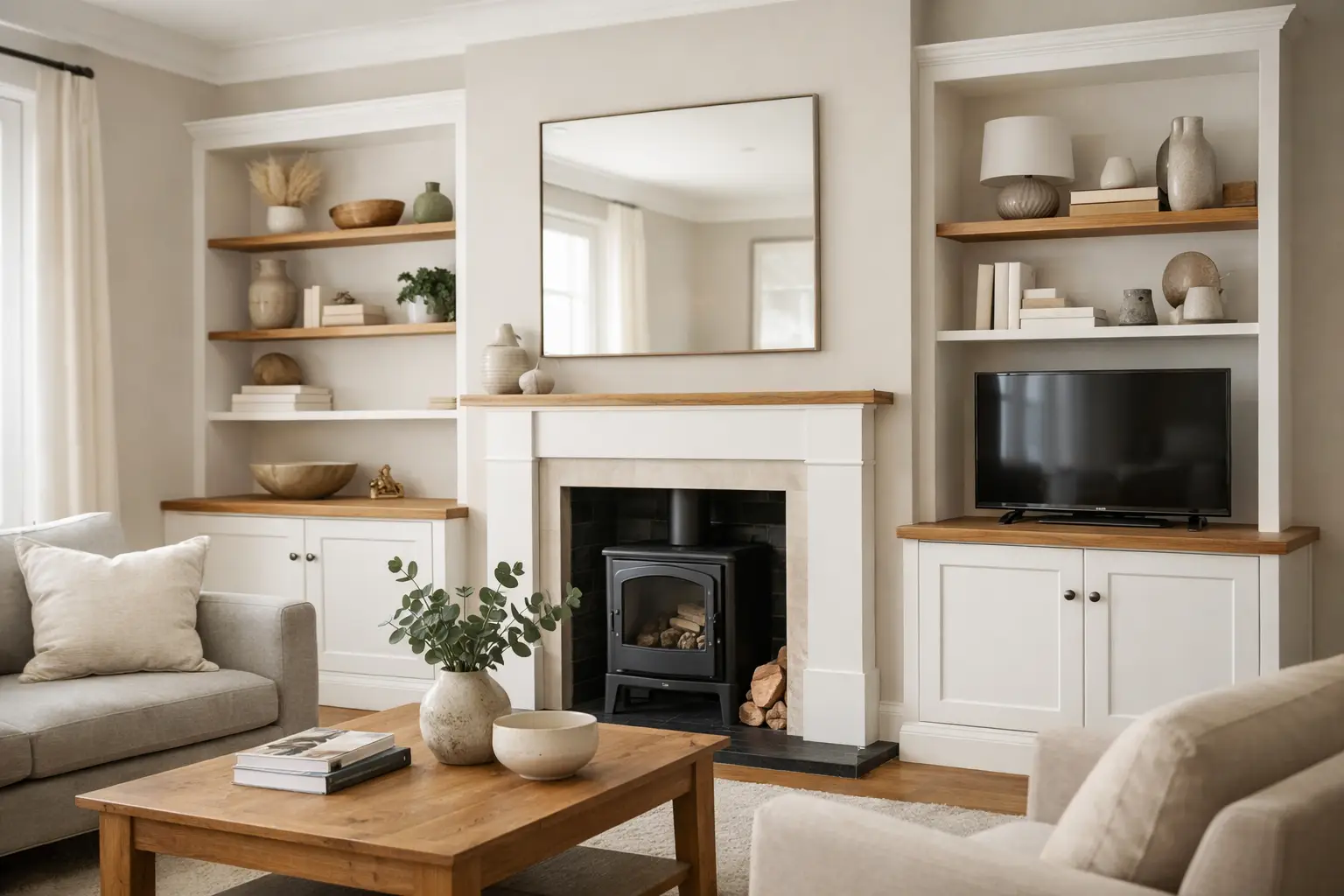
Bespoke Alcove Cabinets That Truly Fit
Some of the most useful space in a home is also the easiest to waste. The alcoves either side of a chimney breast, the shallow recess in a sitting room, the awkward gap in a bedroom – these are the places where off-the-shelf furniture rarely sits properly. Bespoke alcove cabinets solve that problem neatly, turning overlooked areas into storage that feels built for the room because it is.
A well-made alcove cabinet does more than fill a gap. It brings order to a space, softens visual clutter and gives the room a more settled, finished feel. When the proportions are right and the joinery is carefully made, the result looks as though it has always belonged there.
Why bespoke alcove cabinets work so well
Alcoves are rarely straightforward. Walls can be out of square, floors can slope slightly, skirting boards interrupt clean lines, and older properties often come with their own quirks. That is exactly why a made-to-measure approach matters.
Standard cabinets leave gaps, waste depth or force compromises on height and width. A bespoke piece is measured to the room, designed around how you live, and built to make proper use of every inch available. That might mean low-level cupboards with shelving above, full-height cabinetry for a more architectural look, or a balanced combination of open display and concealed storage.
There is also the question of visual harmony. A cabinet should not feel like an afterthought. It needs to sit comfortably with period details, modern décor, or the practical demands of a busy family home. The best results come from treating the alcove as part of the room rather than a leftover space to be plugged.
What to consider before designing bespoke alcove cabinets
The first decision is not style but purpose. Before thinking about handles, paint colours or shelving layouts, it helps to be clear about what the cabinet needs to do.
In a sitting room, one household may want a place to hide away board games, chargers and everyday clutter, while another may need shelving for books and cupboards for media equipment. In a dining room, the priority might be glassware, serving pieces and table linen. In a bedroom, alcove cabinetry often works best when it combines drawers, hanging space and upper storage without making the room feel heavy.
Depth is another important consideration. Deeper cabinets give you more capacity, but they can also crowd a narrow room if they project too far. Shallower designs often feel lighter and can be ideal for books, decorative objects or smaller household items. There is no single correct answer – it depends on the proportions of the room and how the storage will be used.
Then there is symmetry. Many people prefer matching cabinets on both sides of a chimney breast because it creates a calm, balanced look. That said, symmetry is not always the best route. If one side of the room gets more natural light, or if one alcove is interrupted by a radiator or doorway, it may be better to treat each side differently. Good design is not about forcing a layout. It is about responding to the room honestly.
Style, materials and finish
The most successful alcove cabinets are practical, but they should also feel like part of the home’s character. This is where material choice and finishing detail make a real difference.
Painted cabinetry remains a popular choice because it gives a clean, tailored appearance and works across both classic and contemporary interiors. Softer tones can help a larger cabinet recede into the wall, while darker colours can add weight and presence. Natural timber, or timber details used within a painted design, brings warmth and texture that mass-produced units often lack.
Details matter more than many people expect. Door style, shelf thickness, panel proportions, cornice lines, plinths and ironmongery all shape the final look. A simple shaker-style door can feel timeless. A slimmer, more understated profile may suit a modern property better. In period homes, cabinetry can be designed to respect original features rather than competing with them.
Quality is visible in the quieter things too – crisp scribing against uneven walls, neat internal finishes, doors that hang properly, drawers that move smoothly, and shelves that feel solid under weight. Those are the details that give fitted joinery its lasting value.
Bespoke alcove cabinets in different rooms
Living rooms are the most obvious home for alcove cabinetry, but they are far from the only option. In fact, some of the most satisfying projects are in rooms where storage is needed but often poorly solved.
In lounges and reception rooms, alcove cabinets can frame a fireplace beautifully and keep everyday items out of sight. Lower cupboards with floating shelves above are particularly effective if you want the room to feel open while still gaining practical storage. If a television or sound system needs to be included, it is possible to plan for cables, ventilation and equipment access without making the whole arrangement feel overly technical.
In bedrooms, bespoke cabinetry can turn narrow recesses into useful storage without the bulk of a freestanding wardrobe. This is especially valuable in older homes, where room proportions can be charming but awkward. Built-in cupboards, bedside shelving or a fitted desk can all make the space work harder while keeping the feel of the room calm.
Dining rooms and home offices benefit as well. An alcove cabinet can house paperwork, display ceramics, hold printer equipment or create a place for lighting and decorative pieces. Because the design is tailored, the storage can be as discreet or as expressive as you want it to be.
The value of made-to-measure joinery
There is a clear difference between furniture that merely fits into a room and joinery that is made for it. Made-to-measure work responds to walls, ceilings, skirting, cornices and floor levels. It also allows the design to be shaped around your habits rather than around standard manufacturing sizes.
That flexibility matters. You may want one shelf set exactly high enough for art books, a cupboard sized for a specific speaker, or a combination of drawers and doors that better suits how your family stores things. These are not extravagant details. They are the practical advantages of a bespoke approach.
For many homeowners, there is also reassurance in having the whole process handled carefully from measuring through to manufacture and fitting. When the design, build and installation are considered together from the start, the finish is cleaner and the result more cohesive. It avoids the pieced-together look that often comes from trying to adapt separate products on site.
Getting the balance right
The best bespoke alcove cabinets do not simply maximise storage. They strike a balance between usefulness and visual lightness. Too much cabinetry can make a room feel boxed in. Too little and the opportunity is missed.
This is where craftsmanship and experience really count. Sometimes the right answer is to keep the lower half enclosed and the upper half open. Sometimes full-height joinery gives the room more presence and order. In other cases, a simple pair of base cabinets with a timber top is enough.
It also helps to think long term. Trends in interiors come and go, but fitted furniture should feel right for years. That usually means favouring proportion, material quality and thoughtful detailing over anything overly fashionable. A cabinet that is beautifully made and properly considered tends to age well because it serves the room rather than chasing a look.
Sustainable material choices can also play a part. Carefully selected timber and well-made components support longevity, and that matters. Furniture built to last is better for the home and better for the way we value craftsmanship.
A feature that earns its place
There is something especially satisfying about a piece of joinery that makes a room feel more complete. Bespoke alcove cabinets do exactly that. They give structure to awkward spaces, create storage where it is genuinely needed and add a sense of permanence that freestanding furniture often cannot achieve.
For homeowners who care about quality, fit and finish, they are one of the most effective improvements you can make. Not because they shout for attention, but because they quietly make everyday life easier while lifting the whole character of the room.
If you are considering fitted storage, start with the alcoves you have been ignoring. They may well hold the smartest solution in the house.