
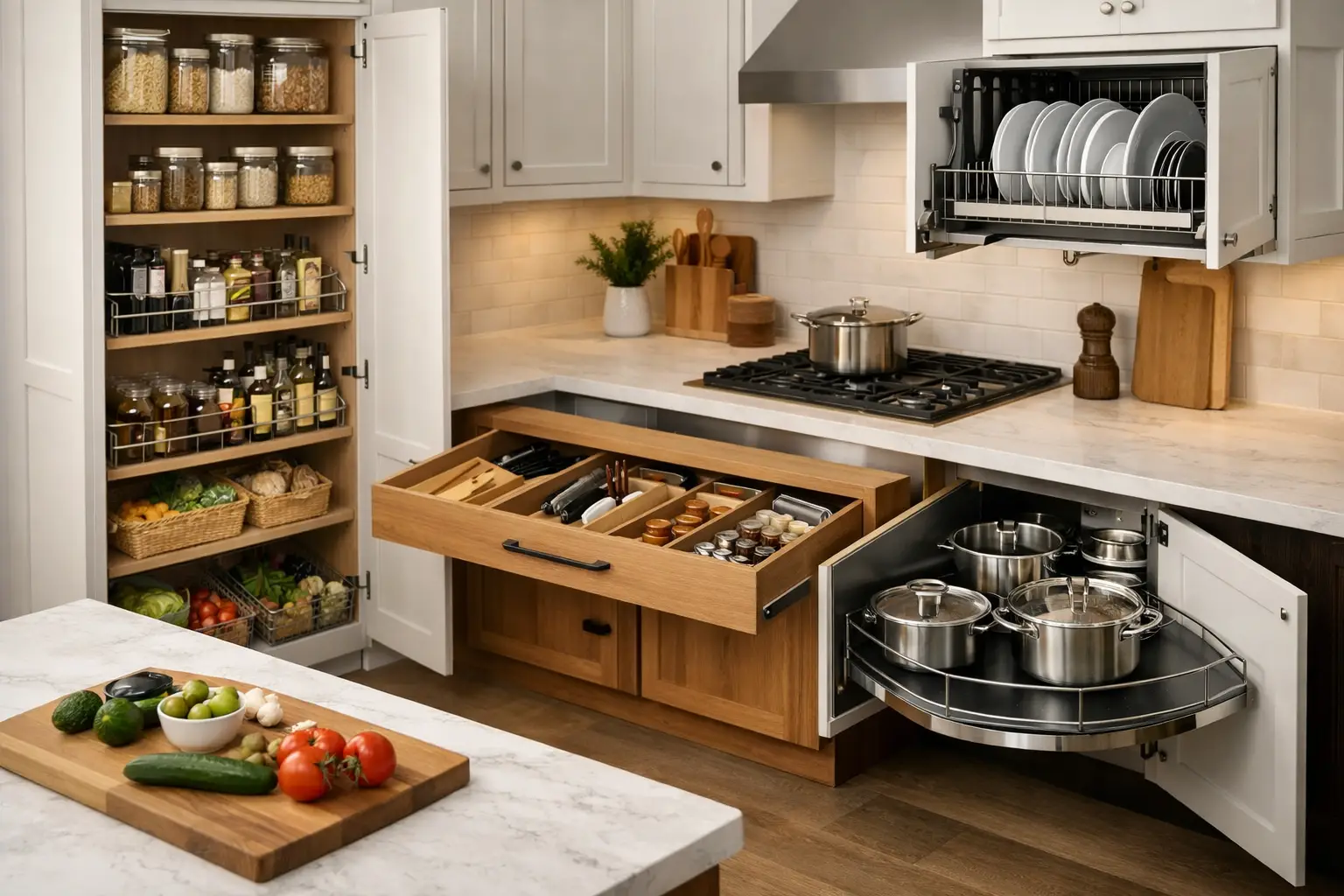
Bespoke Kitchen Storage Solutions That Work
A kitchen usually tells you what is wrong with it long before you put it into words. The corner cupboard becomes a black hole for pans. Baking trays slide about every time a door opens. Small appliances live permanently on the worktop because there is nowhere sensible to put them. That is where bespoke kitchen storage solutions earn their place – not as an extra, but as a better way to make the room work.
Good storage is not only about fitting more in. It is about making the kitchen easier to use, calmer to look at, and better suited to the way your household actually lives. When storage is planned around real routines, even a busy family kitchen can feel ordered and spacious.
Why bespoke kitchen storage solutions make such a difference
Off-the-shelf cabinets do a job, but they are built around standard sizes and generic layouts. Real homes rarely behave so neatly. Chimney breasts interrupt runs of units, walls drift out of square, and older properties often have awkward corners or wasted voids that standard cabinetry simply ignores.
Bespoke kitchen storage solutions respond to the room as it is, not as a showroom assumes it should be. That means every cupboard, drawer and shelf can be measured to suit the exact dimensions of the space. It also means the internal layout can reflect what you own and how you use it. A keen cook does not need the same arrangement as someone who wants a clean, minimal kitchen with hidden appliances and simple everyday access.
There is also the visual side. Storage should not feel like an afterthought. Carefully made timber joinery brings a sense of order and finish that flat-pack units struggle to match. When proportions are right and materials are chosen with care, practical storage becomes part of the design of the room rather than something squeezed into it.
The best storage starts with habits, not hardware
One of the most useful questions in kitchen design is also one of the simplest: what annoys you every day? Usually, the answer points straight to the storage problem. It may be a lack of pan storage near the hob, nowhere tidy for recycling, or wall units that are too high to reach comfortably.
A bespoke approach starts there. Instead of selecting a standard cabinet and trying to adapt your life around it, the joinery is shaped around your habits. If breakfast is always a rush, a dedicated cupboard for cereals, mugs and the toaster can keep that routine contained in one area. If you love to cook, deep drawers for pans and internal dividers for utensils often make more sense than traditional cupboards with fixed shelves.
This is where craftsmanship matters. Thoughtful internal details can look modest on paper, yet make a noticeable difference in daily use. The right drawer depth, the right shelf spacing, the right door swing – these are small decisions that add up to a kitchen that feels easy.
Where bespoke kitchen storage solutions work hardest
Some parts of a kitchen almost always benefit from custom joinery. Corners are a common example. They tend to lose usable space or become awkward to access, especially in compact kitchens. A tailored corner solution can turn that forgotten area into practical storage for larger cookware, serving dishes or less frequently used items.
Tall units also offer far more potential than many people realise. Rather than a single large cavity, a bespoke tall cabinet can be divided into purposeful zones. Dry goods, trays, small appliances, cleaning products or even a concealed breakfast station can each have their place. The result is a cleaner visual line and far less clutter on show.
The gap beneath seating, around alcoves or beside freestanding appliances can also be surprisingly valuable. In many homes, these are the spaces that standard kitchens leave behind. Made-to-measure joinery can reclaim them beautifully, whether through slim pull-out storage, fitted shelving or neatly integrated cupboards.
Storage that looks calm because it has been thought through
There is a difference between a kitchen that contains things and a kitchen that feels organised. The second usually comes down to visual discipline. When too many objects sit out on the worktop, even a well-made kitchen can feel busy.
Bespoke storage helps by giving everyday items a proper home. That might mean housing a microwave in a fitted unit, creating a cupboard sized exactly for a coffee machine, or building drawers with internal organisation for cutlery, spices and utensils. Once those practical needs are accounted for, the room feels more settled.
This does not mean everything has to be hidden away. Open shelving can work beautifully when used with restraint. It suits items you reach for often or pieces you genuinely enjoy displaying. Timber shelves also bring warmth and character, particularly when paired with fitted cabinetry. The balance matters, though. Too much open storage creates visual noise. Too little can make the room feel heavy. A bespoke design can strike that balance far better than a one-size-fits-all layout.
Materials matter as much as the layout
Storage gets used hard. Doors open and close all day, drawers carry weight, shelves take strain, and kitchen conditions change with heat and moisture. For that reason, the quality of materials matters just as much as the design itself.
Well-made timber joinery has a presence that manufactured board often lacks. It feels more substantial, ages with more grace, and can be tailored in a way that gives the whole kitchen a more natural, grounded finish. For many homeowners, there is also real value in choosing sustainable or reclaimed materials where suitable. They bring character, depth and a sense that the work has been made with care rather than mass produced.
That said, the best material choice depends on the job. Painted finishes can brighten a room and suit classic or contemporary kitchens alike. Natural wood tones offer warmth and texture but may call for a slightly calmer overall palette if the space is small. It is rarely a question of one being better than the other. It depends on the look you want, how you use the room, and how much visible grain or colour variation you enjoy.
Why measuring and fitting matter
Storage only feels bespoke if it truly fits. That may sound obvious, but it is often where kitchen projects rise or fall. Even the most attractive unit can disappoint if fillers are clumsy, doors catch awkwardly, or access has not been considered properly.
Careful measuring allows storage to sit cleanly within the architecture of the room. It helps account for uneven walls, ceiling lines, existing services and circulation space. It also gives you the chance to think through practical details before anything is made. Can two drawers open at once? Is there enough clearance near a doorway? Will a tall cabinet dominate the light in that corner?
Professional fitting completes the picture. A well-fitted kitchen should feel solid, aligned and calm. It should also be installed with respect for the home itself – tidy working, conscientious finishing and attention to the final details all make a real difference to the experience.
A tailored kitchen feels better to live with
The strongest case for bespoke storage is not that it is clever. It is that it removes friction from everyday life. You stop hunting for lids. You stop stacking things where they do not belong. You gain clear surfaces, better flow and a kitchen that supports the way you cook, clean and gather.
For some households, the priority is maximum storage in a compact footprint. For others, it is creating a refined, understated kitchen where function is quietly built in. Both are valid. The value of bespoke joinery is that it can meet either aim without forcing compromise where it matters most.
At Sosa Joinery, that is very much the heart of the work – practical craftsmanship shaped around the home, the space and the people using it. When storage is made properly, it does more than tidy things away. It gives the whole kitchen a sense of purpose.
If your kitchen has awkward gaps, cluttered worktops or cupboards that never quite earn their keep, the answer may not be more storage in the general sense. It may be better storage, designed with care and built to belong exactly where it is needed.