
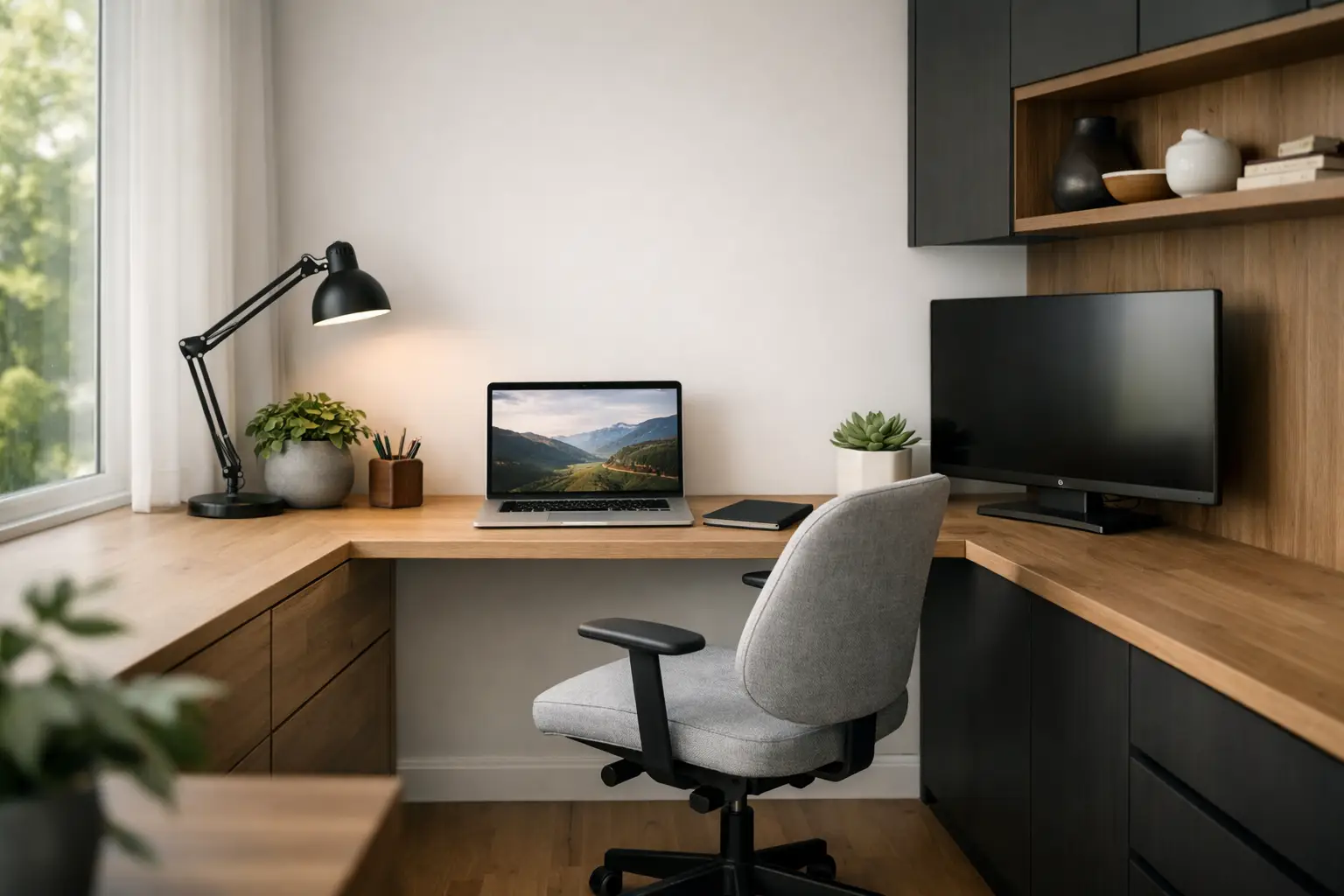
Made to Measure Home Office Desk Ideas
A spare room rarely behaves like a proper office on its own. There is usually an awkward alcove, a sloping ceiling, a radiator in the wrong spot, or simply not quite enough width for the desk you actually need. That is where a made to measure home office desk comes into its own. Instead of forcing your working day around a standard piece of furniture, you create a desk that suits the room, the way you work, and the look you want to live with.
For many homeowners, the difference is immediate. The room feels calmer because the desk sits exactly where it should. Storage is built around your daily habits rather than added as an afterthought. Wires, printers and paperwork have somewhere sensible to go, and the whole space feels less temporary.
Why a made to measure home office desk works better
A home office has to do more than hold a laptop. It needs to support concentration, keep clutter under control and fit comfortably into the home around it. Standard desks can work in simple spaces, but they often leave wasted gaps, block natural movement or look too small in one corner and too bulky in another.
A made to measure home office desk solves those little frustrations at source. The width can run wall to wall if that makes best use of the space, or it can be kept compact if the room is doing double duty as a guest bedroom. Depth can be adjusted so you have enough room to work without making the room feel pinched. Height can be set to suit the user, which matters more than many people realise when you are spending hours at the desk each day.
There is also the visual side of it. A bespoke timber desk does not have to look overtly office-like. It can feel part of the house, with materials and finishes that sit naturally alongside flooring, shelving, wardrobes or other fitted joinery. That often matters in homes where the office is visible from a landing, living space or bedroom.
Start with how you actually work
The best desk design usually begins with a simple question: what needs to happen here every day? Some people need a broad surface for dual screens, notebooks and samples. Others work mainly on a laptop and would rather prioritise drawers, shelves or hidden charging points. A desk for occasional admin is different from one used for full-time remote work.
It is worth thinking honestly about your routine. If paperwork piles up, open shelving may only display the mess rather than solve it. If you prefer a clean top, built-in drawers and cupboard space will do more of the heavy lifting. If your work involves regular calls, the room layout and screen position matter as much as the desk itself.
This is where bespoke design earns its place. Rather than choosing from fixed sizes and trying to compromise, the desk can be shaped around your habits. That often leads to a simpler, more elegant result because every element has a purpose.
Getting the size right without overpowering the room
One of the biggest misconceptions is that custom means bigger. In practice, it often means more efficient. A fitted desk can make a small room feel larger because it removes dead space and avoids the stop-start look of freestanding furniture squeezed between walls.
An alcove is a good example. Off-the-shelf desks tend to sit awkwardly, leaving gaps at the sides that collect dust and waste valuable width. A desk made for that exact opening can span the full space neatly, giving you a generous working surface without visually crowding the room.
The same applies under windows, in loft conversions and in box rooms where every centimetre counts. That said, there is a balance to strike. A desk with too much depth can dominate the room and reduce circulation. Too little depth, and your screen ends up too close for comfort. Good joinery is not simply about fitting something in. It is about judging proportion so the room still breathes.
Storage should support the desk, not fight it
A tidy home office usually depends less on discipline than on design. If there is nowhere sensible for cables, chargers, files and peripherals to go, the surface becomes the storage. That is why integrated storage often makes such a difference.
Drawers can be sized for stationery, documents or larger equipment. Open shelves can hold books and display pieces if you want the office to feel more personal. Cupboards can conceal printers and less attractive essentials. In some homes, combining a desk with wall shelving creates a complete fitted study area that looks settled and intentional rather than pieced together over time.
There is no single right approach. Open storage feels lighter but shows everything. Closed storage looks calmer but can be less convenient for items used constantly. Often the best answer is a mix of both, designed around what you reach for most.
Timber choice changes the whole feel
Material matters because your desk is something you see and touch every day. Solid timber and quality veneers bring warmth that flat-pack furniture rarely matches, and they tend to age far more gracefully. A well-made desk should still look good years down the line, even as the room around it changes.
Lighter woods can brighten a compact office and keep the look fresh. Richer tones add depth and character, especially in period homes or interiors with a more grounded palette. Reclaimed timber can be particularly appealing if you want texture and individuality, though it is not always the right fit for every scheme. A cleaner, more contemporary room may suit a smoother, more uniform finish.
The practical finish matters too. A desk used daily needs a surface that can cope with mugs, notebooks, laptop stands and the general wear of real life. Beauty and durability should work together.
Made to measure home office desk features worth considering
The most useful details are often the least flashy. Cable management, for example, can transform how the desk feels in use. Grommets, concealed routes and access points help keep wires under control, especially if you use multiple screens or need chargers within easy reach.
You might also want a recessed area for a radiator, floating installation for a lighter look, or a return section to create an L-shape work zone. In family homes, some clients prefer a desk that can shift between adult work and children’s homework. Others want integrated shelving above so the whole wall works harder.
What matters is choosing features that genuinely improve the space. A bespoke desk should remove friction from your day, not add complexity for the sake of it.
A fitted desk should feel part of the house
One of the strongest reasons to invest in bespoke joinery is consistency. A home office should not feel like a separate world dropped into the house. When the desk is designed in keeping with existing woodwork, colours and room proportions, it feels settled from the start.
That is especially valuable in multi-use spaces. If the office shares a room with a bedroom or living area, a carefully designed desk can blend in far more gracefully than standard office furniture. It may read as built-in cabinetry first and workspace second, which helps the room stay warm and domestic rather than corporate.
At Sosa Joinery, that balance between function and finish is a big part of the appeal. Good craftsmanship is not only about crisp joints and accurate fitting, though those matter greatly. It is also about understanding how a piece will live in the home.
The value of measuring, making and fitting properly
A made to measure desk is only as good as the process behind it. Careful measuring ensures the finished piece responds to walls that are not perfectly straight, uneven floors, skirting details and all the little realities that standard furniture ignores. Manufacturing with those specifics in mind is what creates the clean fitted look people are usually after.
Professional fitting matters just as much. It is the stage where proportions, finish and function come together. Drawers need to move smoothly, tops need to sit level, and every edge needs to feel intentional. The end result should look effortless, even though a great deal of skill sits behind that simplicity.
Choosing a desk you will still love in five years
Trends move quickly, but a home office desk should have staying power. The safest route is usually to focus on proportion, quality materials and a design that reflects how you genuinely live. Highly fashionable details can date faster than people expect, while well-made, thoughtfully designed timber furniture tends to settle in and improve with age.
It is also wise to think slightly ahead. If your work setup may expand, a desk can be designed with future equipment in mind. If the room might later become a study for older children or a shared workspace, flexibility is worth building in from the start.
A good desk does not need to shout for attention. It simply needs to fit beautifully, work hard every day and bring a sense of order to the room. When those things come together, the office feels less like a compromise and more like part of the home you wanted all along.